
Facebook

Twitter (X)

Instagram

Somali Magazine - People's Magazine
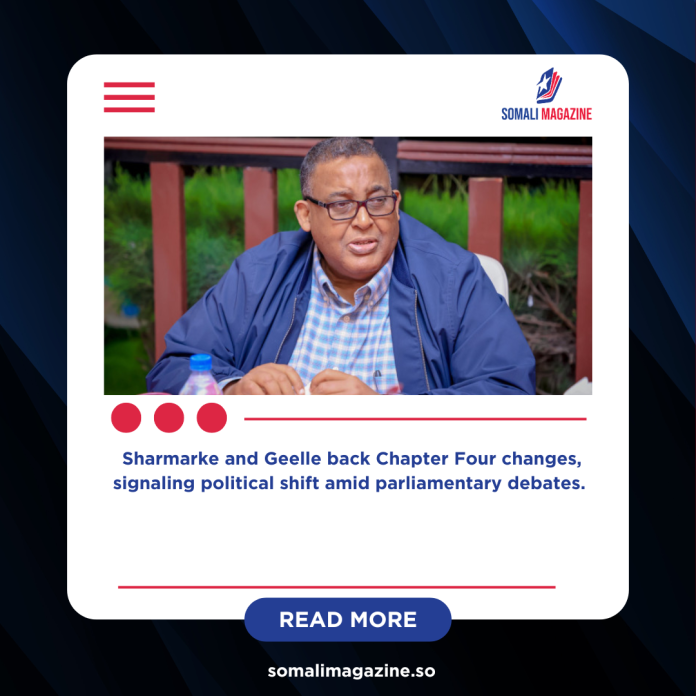
Former Somali Prime Minister Omar Abdirashid Ali Sharmarke has publicly endorsed proposed changes to Chapter Four of Somalia’s Provisional Constitution, signaling strong support for ongoing parliamentary discussions. Speaking at a press conference in Mogadishu alongside veteran diplomat Ambassador Dahir Mohamud Geelle, Sharmarke expressed his approval of the amendments and praised the government and parliamentary committees for moving forward with reforms that had been previously agreed upon.
Sharmarke acknowledged that it would have been better if the constitutional issue had reached parliament earlier, but he welcomed the current progress. “We thank the government for implementing what was agreed upon before,” he said, noting that the amendments reflect an agreement reached with Villa Somalia on August 25. He also commended the government’s commitment to honoring that deal, calling the first reading of Chapter Four in parliament a positive step forward.
While Sharmarke’s endorsement is significant, he also acknowledged that some issues remain unresolved, particularly those related to upcoming elections. Discussions are still ongoing between the federal government and the Somali Future Council, a consultative body that represents political and civic actors. Sharmarke emphasized the importance of these talks producing constructive outcomes, especially in areas where agreement is still needed.
The support from Sharmarke and Geelle represents a notable political shift. Both were formerly members of the Salvation Forum, Somalia’s main opposition alliance, but they later withdrew and signed an electoral agreement with President Hassan Sheikh Mohamud. This move has been widely interpreted as reducing the opposition’s collective influence, giving momentum to the government’s constitutional agenda.
Meanwhile, Somalia’s bicameral parliament continues to review the proposed amendments to the Provisional Constitution. Lawmakers recently examined Chapter Four, focusing on Articles 49, 50, and 54, which address the federal system, the relationship between the central government and member states, and the distribution of powers. These proposed changes have sparked debate, with some lawmakers, opposition groups, and federal member states warning that the amendments could concentrate power in Mogadishu.
Despite these concerns, the government argues that the reforms are necessary to complete Somalia’s long-delayed constitutional review and to promote stability in governance. Supporters of the amendments see them as a key step toward clarifying roles and responsibilities within the federal system, while critics fear a potential imbalance of power.
The public endorsement by Sharmarke and Geelle adds momentum to the debate, highlighting a willingness among some former opposition figures to back constitutional changes for the sake of political progress. Observers note that their support could influence the parliament’s decision-making and encourage further dialogue between the government and other political stakeholders.
As the discussion unfolds, all eyes remain on the Somali Future Council and its negotiations with the federal government. Many hope that these talks will resolve outstanding issues, particularly concerning the electoral process and the equitable distribution of authority between the central government and member states. For now, the endorsement by Sharmarke and Geelle signals a shift in political dynamics and a push toward moving Somalia’s constitutional review forward.