
Facebook

Twitter (X)

Instagram

Somali Magazine - People's Magazine
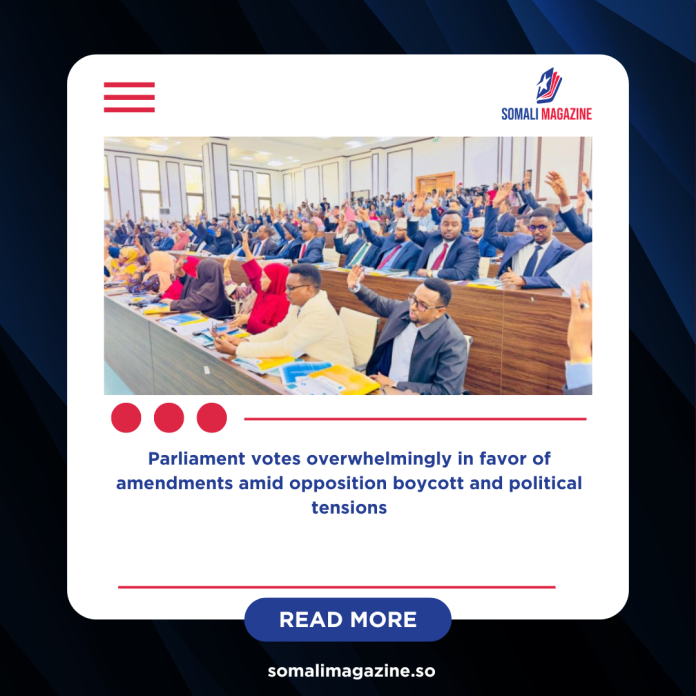
Speaker of the House of the People Sheikh Adan Mohamed Nur Madobe announced that the constitution had been formally adopted and would take effect across the country immediately. He told lawmakers that the document is now the official constitution of the Federal Republic of Somalia and is legally binding nationwide.
The approval wraps up a long constitutional review process that covered Chapters 1 through 13. According to members of parliament, the revisions are designed to clearly define how power is shared between the federal government and the member states. They also aim to strengthen key state institutions and outline the structure of Somalia’s federal system more clearly.
Government officials described the vote as a turning point in the country’s efforts to rebuild stable and effective national institutions. Ali Mohamed Omar, the state minister for foreign affairs and a member of parliament, called the move a historic step forward. He said the revised constitution strengthens democratic institutions, clarifies the federal system and moves Somalia beyond the temporary framework that had guided the country since 2012.
Hussein Idow, who chairs the joint Constitutional Review and Monitoring Committee, said the 11th parliament had fulfilled one of its main responsibilities by completing the constitutional review. For years, finalizing the constitution had been seen as one of the key unfinished tasks in Somalia’s state-building process.
Somalia first adopted a provisional constitution in 2012, marking the end of the Transitional Federal Government and the beginning of permanent federal institutions. However, several important sections were left incomplete at the time. Leaders promised to carry out a full review later, but the process faced repeated delays due to political disagreements and tensions between the federal government and regional states.
The latest vote took place amid growing political divisions. Lawmakers aligned with Puntland and Jubbaland, as well as those linked to the opposition Somali Future Council, did not take part in the session. Their absence highlighted ongoing disagreements over how the review process was handled.
In recent weeks, parliamentary debates over the constitutional amendments were tense. Heated arguments and procedural disputes led to several postponed sittings before the final vote was held. Opposition figures have argued that major changes to the federal structure should only be made through broad national consensus and inclusive consultations. They claim the government pushed the amendments forward too quickly without securing enough agreement from federal member states and other political stakeholders.
Despite the criticism, the federal government insists that the process was legal and necessary. Officials argue that finalizing the constitution provides much-needed clarity about governance and prepares the country for future reforms. Among the proposed changes ahead is a shift toward a one-person, one-vote electoral system, replacing the indirect model that has been used in recent years.
Supporters of the revised constitution believe it will help reduce confusion over the division of powers and strengthen cooperation between federal and state authorities. They say having a clear and fully adopted constitution is essential for improving governance, building trust in public institutions and guiding the country toward more stable democratic rule.
While the vote marks a significant milestone, political tensions remain. How the revised constitution will be implemented, and whether dissenting regions and opposition groups will accept it, could shape Somalia’s political landscape in the months and years ahead.