
Facebook

Twitter (X)

Instagram

Somali Magazine - People's Magazine
Somalia voted on Monday in favor of a United States–drafted resolution at the UN Security Council that supports President Donald Trump’s plan to end the war in Gaza and authorizes the creation of an international stabilization force for the territory. The resolution passed with 13 votes in favor, while Russia and China chose to abstain, allowing the measure to be adopted.
Although Somalia’s Ministry of Foreign Affairs has not yet released an official statement, diplomats say the vote reflects Mogadishu’s support for the growing international push behind the stabilization proposal. Many countries see the plan as a necessary step toward stopping the conflict, rebuilding Gaza, and setting the stage for long-term political progress.
The Palestinian Authority welcomed the Security Council’s decision and said it is ready to take part in carrying out the plan. Palestinian officials view the resolution as a possible opening for renewed diplomacy and a chance to move closer to a lasting solution after months of intense fighting.
The resolution has stirred political debate within Israel, mainly because it acknowledges the possibility of eventually establishing a Palestinian state. This remains a divisive issue among Israeli leaders and the broader public. Some Israeli officials argue that discussing Palestinian statehood now could undermine national security, while others believe it is important to keep political options open as part of a broader peace effort.
Somalia voted alongside several Arab and Muslim-majority countries, including Egypt, Saudi Arabia, and Turkey. These nations have expressed support for a permanent ceasefire in Gaza and a new political process that could lead to an independent Palestinian state in the future. Their alignment signals a shared regional desire for stability, humanitarian relief, and a clearer path toward resolving long-standing conflicts involving Palestinians and Israelis.
Sources familiar with Somalia’s position say the country remains firmly committed to the two-state solution, which envisions Israel and a future Pa
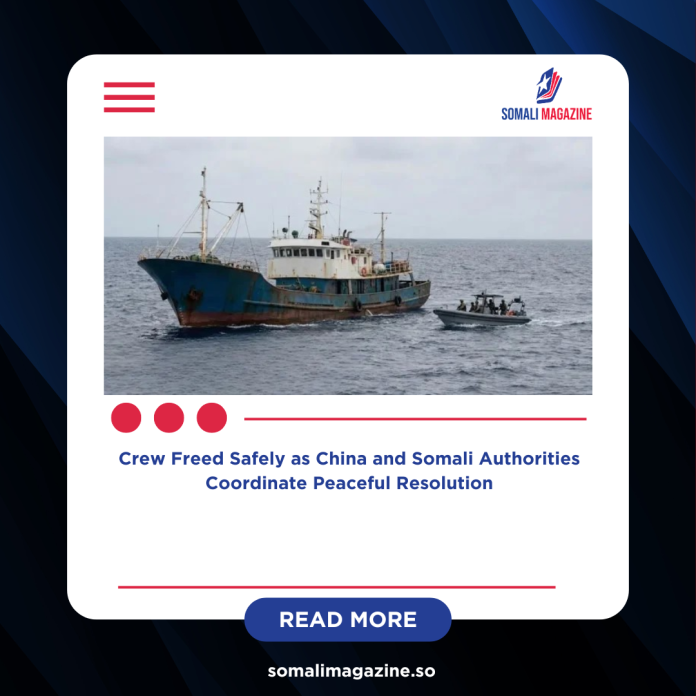
A Chinese fishing vessel that was captured by armed men off the coast of Puntland has been safely released, along with all its crew members. Officials confirmed the development on Tuesday, saying the matter was resolved through joint efforts by the Chinese government, Somalia’s federal authorities, and Puntland leaders.
According to a statement from the Chinese Embassy in Mogadishu, the vessel was freed on March 2 after what it described as close consultations between Somalia’s federal leadership and the Puntland presidency. The embassy said the situation ended peacefully and all crew members were confirmed safe.
The Chinese government strongly condemned the seizure, calling it a serious and dangerous act that put the lives of the crew at risk and threatened the safety of international shipping routes. In its statement, the embassy stressed that China would continue to take all necessary steps to protect its citizens and businesses operating abroad. It also said Beijing would work closely with Somali authorities and other partners to improve maritime security and prevent similar incidents in the future.
So far, officials have not revealed many details about what exactly happened. The identity of the armed group involved in the seizure has not been made public. It is also unclear how long the vessel was held or whether any ransom was demanded or paid. In past cases involving ships off the Somali coast, pirate groups have sometimes asked for millions of dollars in exchange for releasing vessels and their crews. However, there has been no confirmation that such a payment was made in this case.
Somalia’s federal government confirmed that the Chinese fishing vessel was legally operating in Somali waters. Authorities said the ship had proper authorization from both federal officials and relevant state authorities. The government emphasized that the vessel’s activities were in line with Somali laws and regulations governing fishing and maritime operations.
Mogadishu also acknowledged China’s security concerns and reaffirmed its commitment to strengthening cooperation between the two countries. Officials described the fisheries sector as an area of mutual benefit, noting that partnerships in this field can support economic growth, create jobs, and improve food security. Somalia and China have maintained diplomatic and economic ties for many years, with cooperation spanning infrastructure, trade, and development projects.
The incident has once again drawn attention to security challenges along Somalia’s coastline. Piracy in the region reached its peak more than a decade ago, when armed groups regularly targeted commercial ships traveling through one of the world’s busiest maritime routes. At the height of the crisis, international naval forces increased patrols in the Indian Ocean and the Gulf of Aden, while shipping companies adopted stricter security measures. These combined efforts significantly reduced the number of attacks.
Despite the major decline in piracy, occasional incidents still occur, raising concerns among governments and shipping operators. Experts warn that economic hardship, weak law enforcement in some coastal areas, and illegal fishing by foreign vessels can create tensions that fuel insecurity at sea.
The peaceful release of the Chinese vessel is being viewed as a positive outcome and a sign of effective coordination between Somalia’s federal government, Puntland authorities, and international partners. However, the case also highlights the need for continued vigilance and stronger maritime security systems to protect both local and foreign vessels operating in Somali waters.