Facebook

Twitter (X)

Instagram

Somali Magazine - People's Magazine
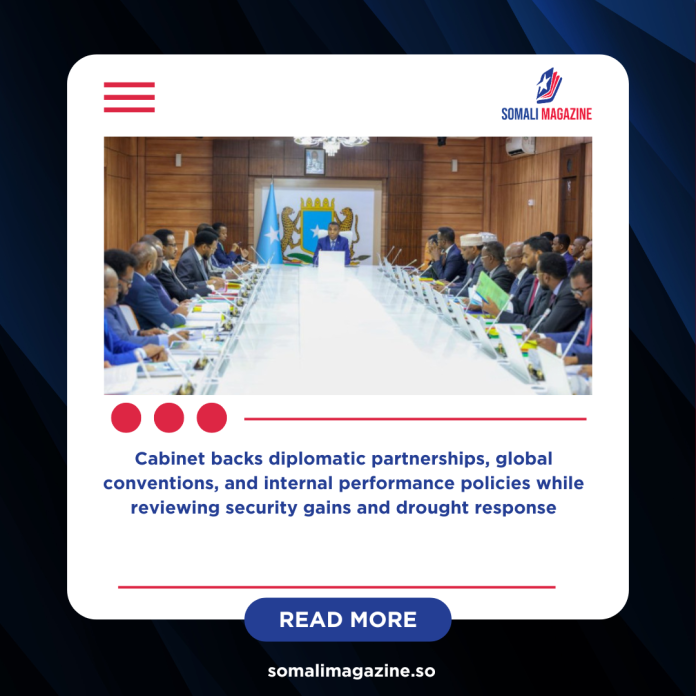
Somalia’s Council of Ministers has approved a series of international agreements and policy measures aimed at strengthening the country’s diplomatic relations, improving regulatory systems, and enhancing government performance. The decisions were made during the Cabinet’s weekly meeting in Mogadishu on Thursday.
One of the key agreements endorsed by the Cabinet was a memorandum of understanding with Pakistan that allows holders of diplomatic passports from both countries to travel without visas. Officials say the arrangement is designed to make it easier for government representatives to visit each other’s countries and hold high-level meetings. The move is expected to support closer diplomatic ties and encourage stronger cooperation between the two nations.
The government also approved a new health sector partnership with Russia. Authorities say the agreement will support collaboration in healthcare development and improve the capacity of Somalia’s health system through technical cooperation and knowledge exchange.
In another diplomatic development, Somalia established a formal framework for political consultations with Spain. The framework outlines procedures and guidelines for regular discussions between the two governments. Officials say it will help both countries coordinate on political, economic, and social matters while strengthening long-term relations.
The Cabinet also validated a procedural agreement aimed at improving regional cooperation across Africa. According to officials, the framework will help Somalia work more closely with other African countries on common political, economic, and security interests. Strengthening regional partnerships has been a priority for the Somali government as it seeks to build stronger connections across the continent.
In a significant step toward international compliance, the Cabinet ratified an agreement with the International Atomic Energy Agency. The agreement focuses on implementing safeguards required under the Treaty on the Non-Proliferation of Nuclear Weapons, including additional monitoring protocols. By approving the agreement, Somalia commits to international standards designed to prevent the spread of nuclear weapons and ensure the peaceful use of nuclear technology.
Ministers also adopted two important international conventions that affect security and maritime operations. The first is the United Nations Convention against Illicit Traffic in Narcotic Drugs and Psychotropic Substances, which focuses on combating drug trafficking and strengthening international cooperation against illegal drug trade. The second is the Convention on Facilitation of International Maritime Traffic, commonly known as the FAL Convention. This treaty aims to simplify and standardize procedures for ships entering and leaving ports, helping to make international maritime transport more efficient.
Government officials say adopting these conventions will help Somalia align its maritime operations, border systems, and regulatory frameworks with international standards. This alignment is expected to improve the country’s global cooperation and strengthen its ability to address issues such as drug trafficking and maritime trade.
Alongside international agreements, the Cabinet also focused on improving the performance of government institutions. Ministers approved a Unified Performance Management Policy intended to create consistent performance standards across federal government agencies. The policy aims to improve efficiency, accountability, and service delivery within public institutions by setting clear benchmarks for government employees and departments.
The Cabinet also promoted two senior officials, Adan Isaaq Ali and Abdifatah Sh. Ahmed Abdimannan, to the rank of ambassador. Officials say the promotions will help strengthen Somalia’s diplomatic corps and support the country’s expanding international engagement.
During the meeting, ministers also reviewed recent progress in military operations conducted by the Somali National Army against the militant group Al‑Shabaab. The government reported that security forces had made territorial gains in ongoing operations aimed at weakening the group’s presence in several regions.
In addition to security updates, the Cabinet discussed the ongoing humanitarian response to severe drought conditions affecting parts of the country. Officials emphasized the need for continued support and coordination to assist communities struggling with water shortages, food insecurity, and displacement caused by the prolonged dry conditions.
Overall, the decisions made during the meeting highlight the Somali government’s efforts to strengthen international partnerships, improve internal governance, and address major national challenges. By expanding diplomatic cooperation, adopting global standards, and focusing on institutional reforms, officials say the government aims to enhance Somalia’s role in the international community while continuing to respond to security threats and humanitarian needs at home.