
Facebook

Twitter (X)

Instagram

Somali Magazine - People's Magazine
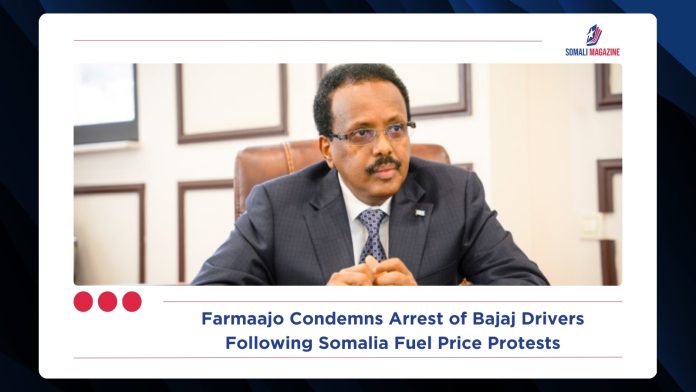
Former Somali President Mohamed Abdullahi Farmaajo has strongly criticized the detention of several Bajaj drivers following demonstrations linked to rising fuel prices, calling on authorities to respect the rights of transport workers struggling with mounting economic pressures. Farmaajo condemns arrest of Bajaj drivers at a time when frustrations over the cost of living are spreading across Somalia’s urban centres.
The Bajaj, a three-wheeled motorized taxi, is one of the most common forms of public transport in cities such as Mogadishu. Thousands of Somali families depend on the small vehicles for daily income, making the sector highly sensitive to changes in fuel prices. In recent weeks, a spike in fuel costs has triggered protests among drivers who say the rising expenses are eroding already thin profit margins.
Witnesses and local media reports indicate that groups of Bajaj drivers gathered in parts of the capital to voice concerns about fuel price increases and the impact on fares. Some demonstrations reportedly disrupted traffic as drivers temporarily halted services to draw attention to their grievances. Security forces later detained several drivers in connection with the protests, prompting criticism from political figures and civil society voices.
Responding to the developments, Farmaajo condemns arrest of Bajaj drivers and urged the government to address the root causes behind the demonstrations rather than punishing workers. In a public statement shared through his media channels, the former president emphasized that transport operators are essential to the country’s urban economy and deserve dialogue rather than detention.
Analysts say the tensions reflect broader economic pressures affecting Somali transport workers and other small business operators. Somalia imports most of its fuel, making local prices vulnerable to global market shifts as well as domestic taxation and distribution costs. For Bajaj drivers Somalia-wide, even small price increases can significantly affect their daily earnings.
Economists and labour advocates have also noted that public transport operators often operate with minimal financial protection. When operating costs rise, drivers face a difficult choice between raising fares for passengers already struggling with inflation or absorbing the losses themselves.
While the government has not issued a detailed public explanation regarding the arrests, officials in the past have stressed the need to maintain public order during protests. However, political observers say that how authorities respond to the concerns of Somali transport workers could influence public trust during a period of economic uncertainty.
As Somalia fuel price protests continue to spark debate, many drivers are calling for greater consultation with authorities on policies that affect their livelihoods. The episode has highlighted the critical role Bajaj drivers play in the daily functioning of Somali cities—and the growing pressure they face as rising fuel costs Somalia-wide reshape the economic landscape.