Facebook

Twitter (X)

Instagram

Somali Magazine - People's Magazine
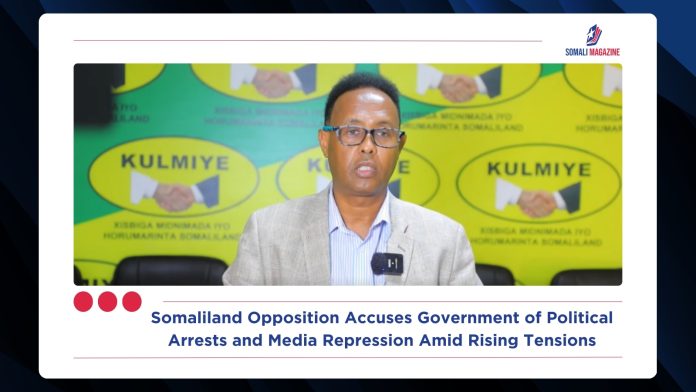
The Somaliland opposition accuses government of political arrests and media repression in a growing dispute that has intensified political tensions across the self-declared republic. Opposition leaders and civil society groups have raised alarm over what they describe as a pattern of detentions targeting critics, journalists, and political activists, sparking fresh debate over democratic freedoms in Somaliland.
According to opposition figures, several individuals have been arrested in recent weeks under circumstances they claim lack transparency and due process. They argue that the arrests are politically motivated, aimed at silencing dissent and discouraging public criticism of the administration. These concerns have been echoed by local advocacy groups, who warn that such actions could undermine the region’s long-standing reputation for relative stability and democratic governance in the Horn of Africa.
Government officials, however, have defended their actions, stating that all arrests are conducted in accordance with the law and are necessary to maintain public order and national security. Authorities have rejected accusations of an opposition crackdown in Somaliland, insisting that no one is above the law and that security agencies are responding to specific legal violations rather than political pressure.
The issue of media repression in Somaliland has also come into sharper focus, with journalists reporting increased scrutiny and, in some cases, temporary detentions. Media organizations have expressed concern over restrictions that they say limit the ability of reporters to operate freely. Press freedom advocates note that a vibrant and independent media sector has long been a cornerstone of Somaliland’s democratic identity, making the current allegations particularly sensitive.
Observers say the dispute reflects deeper Somaliland political tensions linked to electoral processes, governance concerns, and competition among political actors. While Somaliland has often been cited as a rare example of grassroots democracy in the region, periodic political disagreements have tested the resilience of its institutions. Analysts suggest that maintaining open dialogue between the government and opposition will be critical to preserving public trust.
International partners and regional observers are closely monitoring the situation, urging restraint and adherence to legal norms. They emphasize the importance of safeguarding civil liberties, including freedom of expression and the right to political participation, as key pillars of democratic governance.
For many citizens, the unfolding developments raise questions about the direction of governance and the balance between security and individual rights. While daily life continues largely uninterrupted, the broader implications of the allegations remain significant.
As calls for investigation and dialogue grow louder, the Somaliland opposition accuses government of political arrests and media repression continues to shape political discourse. Whether the situation leads to reform or further division will depend largely on how both sides navigate the current tensions and respond to public concerns.