Facebook

Twitter (X)

Instagram

Somali Magazine - People's Magazine
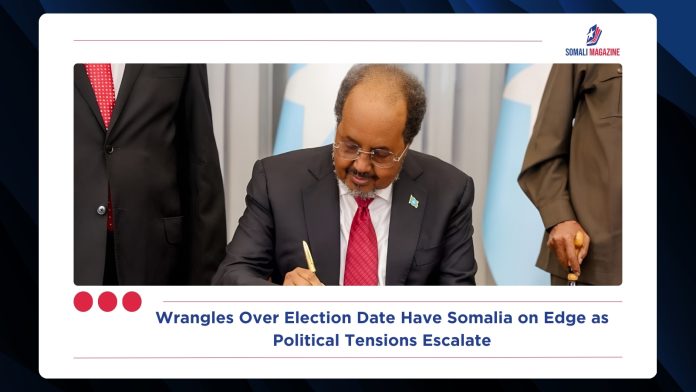
Wrangles over election date have Somalia on edge, as prolonged disagreements among political leaders continue to stall a clear path toward long-awaited national polls. The dispute over timelines has exposed deep fractures within the country’s political leadership, raising concerns about stability and the future of Somalia’s fragile democratic process.
At the heart of the Somalia election crisis is a lack of consensus between the federal government and regional leaders over when and how elections should be conducted. Officials in Mogadishu have defended their position, citing logistical and security challenges that require careful planning. However, opposition figures and some federal member states argue that delays risk undermining constitutional order and public trust.
The ongoing Somalia political tensions are not new, but the stakes appear higher this time. Elections in Somalia are often complex, involving indirect voting systems and negotiations among clan leaders, regional administrations, and federal authorities. Any delay can ripple across the political landscape, affecting power-sharing agreements and governance structures.
Observers note that delayed elections Somalia have historically led to uncertainty and, in some cases, unrest. Civil society groups have called for transparency and adherence to agreed frameworks, warning that prolonged disputes could weaken already fragile institutions. International partners, including the United Nations and African Union, have also urged Somali leaders to resolve their differences through dialogue and compromise.
Federal government disputes with regional states have further complicated the situation. Some leaders accuse Mogadishu of overreach, while federal authorities maintain that a unified approach is necessary to ensure credible elections. These competing narratives reflect broader Somalia governance challenges, where balancing central authority and regional autonomy remains a persistent issue.
For ordinary citizens, the political deadlock is more than a constitutional debate. It raises concerns about security, economic stability, and the delivery of essential services. With the country still facing threats from militant groups and humanitarian pressures, a prolonged electoral impasse could divert attention from critical national priorities.
Analysts suggest that resolving the dispute will require concessions from all sides, alongside sustained engagement from international mediators. While there is cautious optimism that an agreement can be reached, the timeline remains uncertain.
As wrangles over election date have Somalia on edge, the coming weeks will be crucial in determining whether leaders can find common ground. The outcome will not only shape the electoral process but also influence Somalia’s broader trajectory toward stability and democratic governance.