
Facebook

Twitter (X)

Instagram

Somali Magazine - People's Magazine
Somaliland fuel prices have been revised upward as authorities respond to a sustained rise in global oil prices, a move that is already sparking concern among residents and businesses across the region. The adjustment reflects mounting pressure on import-dependent economies as international crude markets remain volatile.
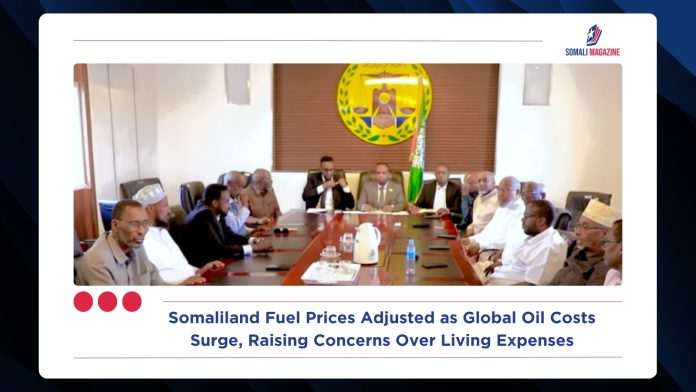
Officials in Somaliland announced the new pricing structure this week, citing increased procurement and transportation costs linked to global supply dynamics. Like many countries in the Horn of Africa, Somaliland relies heavily on imported petroleum products, making it particularly vulnerable to fluctuations in global oil prices. The latest changes are expected to have a ripple effect across key sectors, especially transport and small-scale commerce.
For many residents, the fuel price increase in Somaliland translates directly into higher daily expenses. Public transport operators have begun adjusting fares, while logistics costs for goods moving between المدن and rural areas are also rising. Traders warn that the price of essential commodities could climb in the coming weeks as fuel costs feed into supply chains.
Economic analysts note that the Somaliland economy, which is largely driven by trade, livestock exports, and remittances, is sensitive to such external shocks. While the government has framed the price adjustment as necessary to maintain fuel supply stability, critics argue that more could be done to cushion vulnerable groups. Some have called for temporary subsidies or targeted support for low-income households.
The issue also highlights broader structural challenges. Without domestic refining capacity or diversified energy sources, Somaliland remains exposed to international market trends. Experts suggest that long-term solutions may include investment in renewable energy and improved fuel storage systems to better manage price volatility.
Government officials have urged calm, emphasizing that the revised Somaliland fuel prices are part of efforts to ensure consistent availability of fuel in the face of rising global costs. They also pointed to ongoing discussions with suppliers aimed at securing more favorable terms where possible.
As the situation evolves, the impact of higher fuel costs will likely continue to shape economic conversations in Somaliland. For now, businesses and households alike are bracing for adjustments, underscoring how shifts in global oil prices can quickly translate into everyday realities on the ground.