
Facebook

Twitter (X)

Instagram

Somali Magazine - People's Magazine
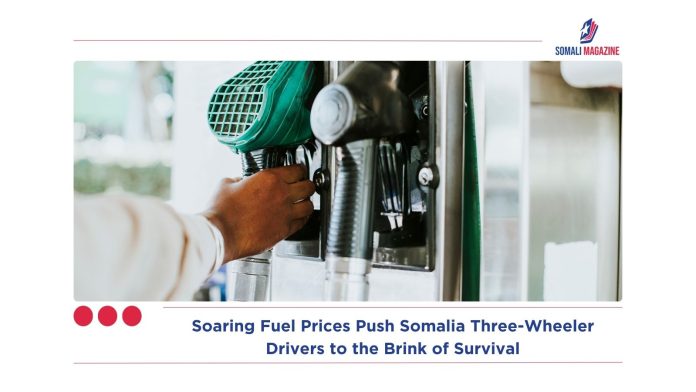
The crisis of soaring fuel prices Somalia three-wheeler drivers are facing has become increasingly visible on the streets of Mogadishu and other major cities, where the once-bustling tuk tuk trade is now under severe strain. For thousands of drivers who depend on these three-wheelers as their primary source of income, the sharp rise in fuel costs is not just an inconvenience—it is a threat to survival.
In recent months, the Somalia fuel crisis has intensified, driven by global oil price volatility, supply chain disruptions, and the country’s heavy reliance on imported petroleum products. With no domestic refining capacity, Somalia remains highly exposed to international market fluctuations. As fuel prices climb, drivers are forced to spend a larger share of their daily earnings simply to keep their vehicles running.
For many tuk tuk drivers Somalia relies on for affordable urban transport, profit margins have shrunk dramatically. What was once a steady income stream is now unpredictable. Drivers report that after covering fuel expenses, little remains to support their families, pay rent, or meet basic needs. Some have begun reducing their working hours, while others have parked their vehicles altogether, unable to sustain daily operations.
Passengers, too, are feeling the impact. Rising transport costs Somalia has seen are being passed on to commuters, leading to higher fares across short-distance routes. In a country where many rely on informal transport systems, this creates a ripple effect across the broader economy. Workers, students, and small traders face increased daily expenses, adding to the already growing cost of living Somalia continues to grapple with.
Government officials have acknowledged the pressure on both drivers and consumers, though policy responses remain limited. Somalia’s fuel market operates largely through private importers, with prices influenced by global benchmarks and local logistics costs. While there have been discussions around regulation and subsidies, implementation has proven challenging due to fiscal constraints and institutional capacity.
Economic analysts warn that prolonged fuel price increases could deepen urban hardship, particularly for those in the informal sector. Three-wheeler drivers occupy a critical space in Somalia’s transport ecosystem, providing flexible and accessible mobility in cities where public transport infrastructure is minimal. Their struggles, therefore, reflect a broader vulnerability within the urban economy.
Despite the challenges, many drivers continue to adapt. Some are exploring fuel-saving techniques, while others are diversifying income sources to stay afloat. Yet these coping mechanisms offer only temporary relief in the face of sustained price pressures. Without structural interventions or stabilisation in global fuel markets, the situation is unlikely to ease in the near term.
The plight of soaring fuel prices Somalia three-wheeler drivers underscores a deeper economic reality—one where global shocks quickly translate into local hardship. As Somalia continues its path toward recovery and development, addressing such vulnerabilities will be crucial in ensuring that growth is both inclusive and resilient.