Facebook

Twitter (X)

Instagram

Somali Magazine - People's Magazine
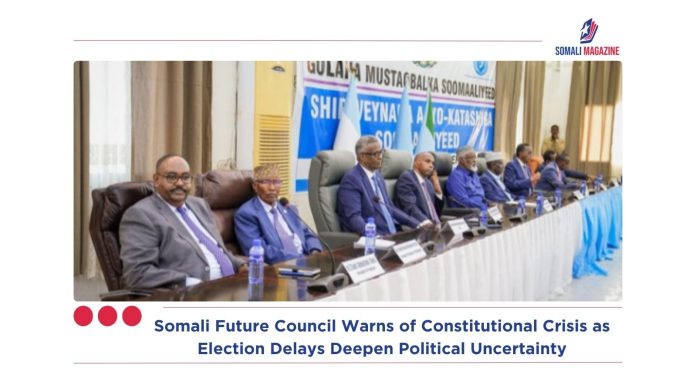
The warning that the Somali Future Council warns of constitutional crisis has intensified concerns across the country’s political landscape, as prolonged Somalia election delays threaten to undermine already fragile institutions. In a strongly worded statement, the council cautioned that failure to adhere to constitutional timelines risks plunging the nation into a deeper governance crisis Somalia has struggled to avoid for decades.
The Somali Future Council, a policy and advisory body composed of former officials, academics, and civil society leaders, emphasized that the repeated postponement of elections is not merely a logistical challenge but a fundamental threat to constitutional order. According to the group, continued delays erode public trust in the electoral process Somalia relies on to maintain legitimacy and stability. The council warned that such uncertainty could create a vacuum of authority, opening the door to political disputes and potential unrest.
Somalia’s electoral system has long faced structural challenges, including security concerns, political disagreements among federal and regional leaders, and logistical constraints. However, observers note that the current delays are occurring in a particularly sensitive period, as the country continues to rebuild institutions following years of conflict. Analysts argue that without clear timelines and credible commitments, the risk of political instability Somalia faces could escalate significantly.
Government officials have acknowledged the delays but maintain that efforts are underway to resolve outstanding issues. Statements from federal authorities suggest that negotiations are ongoing with regional administrations to finalize an electoral framework that is both inclusive and secure. Yet critics argue that repeated assurances have done little to ease public concern, particularly as deadlines continue to pass without tangible progress.
The Somali Future Council’s warning highlights broader fears within civil society that constitutional safeguards are being stretched beyond their limits. Legal experts have pointed out that extended delays without a clear legal basis could weaken the rule of law, setting a precedent that may be difficult to reverse. The phrase Somali Future Council warns of constitutional crisis has since gained traction among commentators, reflecting a growing consensus that the situation demands urgent attention.
International partners, including regional organizations and donor countries, have also expressed concern over the trajectory of Somalia’s electoral process. Diplomatic sources indicate that continued delays could affect external support, particularly if they are perceived as undermining democratic norms. For a country heavily reliant on international assistance, such developments could carry significant economic and political implications.
Despite the mounting pressure, there remains cautious optimism that a resolution can be reached. Political leaders have, in past crises, managed to negotiate compromises that preserved stability, albeit temporarily. However, many observers believe that this moment requires more than short-term fixes. They argue that addressing the root causes of electoral delays—ranging from institutional weaknesses to political mistrust—is essential for long-term stability.
As the debate continues, the warning that the Somali Future Council warns of constitutional crisis serves as a stark reminder of the stakes involved. The coming weeks are likely to be decisive in determining whether Somalia can navigate its current challenges or face a deeper governance crisis that could reshape its political future.