
Facebook

Twitter (X)

Instagram

Somali Magazine - People's Magazine
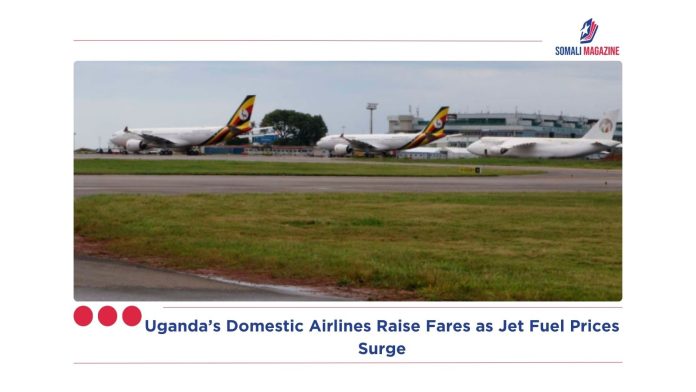
Uganda’s domestic airlines raise fares as jet fuel prices surge, reflecting mounting cost pressures across the country’s aviation sector. According to industry operators and local reports, airlines have begun adjusting ticket prices on key domestic routes in response to rising fuel expenses, which remain one of the largest operational costs in aviation.
Airline representatives indicate that the increase in jet fuel prices has significantly affected operating margins, leaving carriers with limited options beyond passing some of the costs on to passengers. While exact fare adjustments vary by route and airline, early reports suggest noticeable increases on frequently traveled domestic connections, including routes linking Kampala to regional destinations.
The Uganda aviation sector has been navigating a complex recovery following disruptions in recent years, including pandemic-related slowdowns and fluctuating demand. Analysts note that the latest surge in aviation fuel costs adds another layer of financial strain, particularly for smaller domestic carriers with tighter profit margins. In many cases, such airlines lack the financial buffers available to larger international operators.
According to aviation experts, global oil market trends have played a key role in driving up jet fuel prices, with supply chain constraints and geopolitical factors contributing to volatility. Although Uganda imports most of its aviation fuel, local pricing is influenced by international benchmarks, making domestic airlines vulnerable to external cost shocks.
Government officials have previously acknowledged the challenges facing the aviation industry, though there has been limited indication of immediate policy interventions specifically targeting fuel price relief. Some stakeholders within the sector have called for regulatory support or temporary measures to cushion airlines and prevent a sharp decline in passenger demand.
Passengers, meanwhile, are likely to feel the direct impact of fare increases. Travel agents report that higher domestic flight costs in Uganda could shift some travelers toward alternative modes of transport, particularly for shorter distances where road travel remains viable. However, aviation continues to play a crucial role in connecting remote areas where infrastructure gaps persist.
Despite these pressures, industry observers emphasize that fare adjustments are a common response to sustained increases in operating costs. The extent to which Uganda’s domestic airlines raise fares may ultimately depend on future fuel price trends and broader economic conditions.
As jet fuel prices surge, the situation underscores the fragile balance within the aviation sector, where cost fluctuations can quickly influence pricing strategies. While airlines aim to maintain service continuity, the evolving landscape highlights the ongoing challenges of sustaining affordable and reliable domestic air travel in Uganda.