
Facebook

Twitter (X)

Instagram

Somali Magazine - People's Magazine
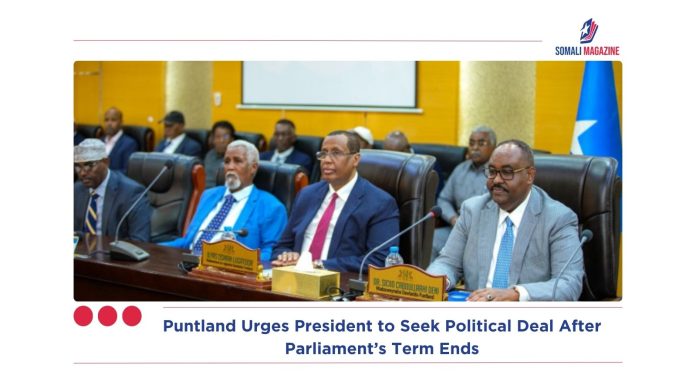
The call that Puntland urges President political deal has added new pressure on Somalia’s federal leadership, as political uncertainty grows following the reported end of Parliament’s term. Officials from Puntland have publicly emphasized the need for dialogue and consensus, warning that failure to reach an agreement could deepen the Somalia political crisis.
According to statements from Puntland authorities, the regional administration believes a negotiated political settlement is necessary to address the current institutional gap. The issue arises after the Parliament term ends Somalia, creating questions about constitutional continuity and governance at the federal level. Puntland officials have indicated that a broad-based agreement involving key stakeholders would be the most viable path forward.
Reports suggest that Puntland’s position reflects longstanding tensions between regional states and the federal government Somalia over constitutional processes and power-sharing arrangements. While Puntland has often advocated for a federal model that ensures regional autonomy, it has also called for inclusive national decision-making during periods of political transition. The latest appeal appears consistent with that stance.
Officials in Mogadishu have not publicly detailed a comprehensive response to Puntland’s latest call, though previous statements from federal leaders have stressed the importance of maintaining institutional stability. According to government sources, efforts to address political timelines and legal frameworks are ongoing, but specifics remain limited. The absence of a clearly defined roadmap has contributed to uncertainty among political actors and observers.
Analysts note that Somalia’s political system has periodically faced similar challenges, particularly during transitions tied to electoral cycles or constitutional mandates. In such instances, negotiated agreements between federal and regional leaders have often played a critical role in preventing escalation. However, the effectiveness of such agreements has varied, depending on the level of political consensus and implementation.
The Puntland government stance underscores concerns that unresolved disputes could affect governance and public confidence in national institutions. While no immediate escalation has been reported, observers caution that prolonged uncertainty may complicate policy-making and coordination between federal and regional authorities.
At this stage, the situation remains fluid, with multiple actors likely to engage in consultations in the coming days. Whether the call for a political deal leads to concrete negotiations will depend on responses from federal leaders and other regional states. For now, Puntland’s message highlights the urgency of dialogue in navigating Somalia’s evolving political landscape.