
Facebook

Twitter (X)

Instagram

Somali Magazine - People's Magazine
Reviving Somalia’s vanishing past has become an increasingly urgent priority in Mogadishu, where efforts are underway to protect sacred heritage sites that reflect centuries of cultural and religious history. From ancient mosques to historic neighborhoods, these landmarks form a vital part of Somalia’s identity, even as urban expansion and years of conflict have placed them at risk.
Local authorities, in coordination with cultural experts and community leaders, have in recent years emphasized the importance of Somalia cultural preservation. According to officials, initiatives aimed at documenting and restoring historic sites in Mogadishu are gradually gaining attention, though challenges related to funding, security, and infrastructure remain significant. Some projects have focused on rehabilitating well-known religious sites, while others seek to preserve lesser-known structures that hold local historical value.
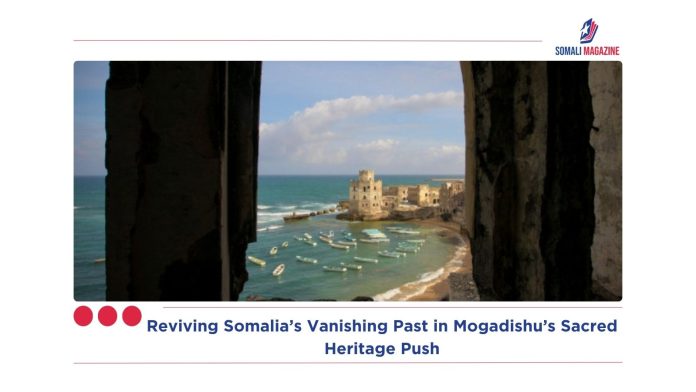
Mogadishu sacred heritage is deeply intertwined with the city’s role as a historic trading hub along the Indian Ocean. Architectural influences from Arab, Persian, and African traditions are visible in older districts, particularly in areas such as Hamar Weyne and Shangani. Experts note that preserving these sites is not only about protecting buildings but also about safeguarding intangible heritage, including oral traditions and community practices.
Reports suggest that international organizations have shown interest in supporting Somalia heritage restoration, although the scale and continuity of such support remain unclear. According to cultural observers, partnerships with global heritage bodies could provide technical expertise and funding, but long-term success will depend on local ownership and sustained government commitment.
At the same time, rapid urban development in Mogadishu presents both opportunities and risks. While reconstruction has brought economic activity and improved infrastructure, it has also led to concerns about the loss of historic sites Mogadishu residents consider irreplaceable. Officials have acknowledged the need to balance modernization with preservation, though comprehensive urban planning frameworks are still evolving.
Community engagement has emerged as a key factor in these efforts. Local residents, historians, and religious leaders have played a role in advocating for the protection of sacred spaces, often highlighting their importance in fostering social cohesion and continuity. According to experts, involving communities in decision-making processes can strengthen preservation outcomes and ensure that restoration efforts reflect local priorities.
Reviving Somalia’s vanishing past is therefore not solely a cultural endeavor but also a broader reflection of the country’s recovery and identity-building process. While progress may be gradual and uneven, the renewed focus on heritage signals a growing recognition of its role in shaping Somalia’s future as much as its past.