
Facebook

Twitter (X)

Instagram

Somali Magazine - People's Magazine
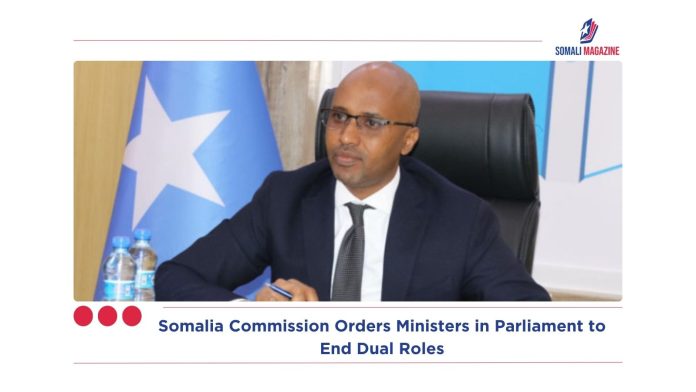
The Somalia commission orders ministers in Parliament to relinquish dual roles has introduced a new phase in the country’s ongoing efforts to strengthen institutional governance and constitutional compliance. According to officials, the directive requires individuals serving simultaneously as government ministers and members of Parliament to vacate one of the positions in line with legal frameworks.
Authorities state that the move is intended to address concerns related to dual roles government Somalia structures, which some analysts argue can blur the separation of powers between the executive and legislative branches. According to officials familiar with the decision, the commission’s directive aligns with provisions aimed at reinforcing checks and balances within federal institutions.
Reports suggest that the order has been communicated to relevant government bodies, although details regarding implementation timelines and enforcement mechanisms remain limited. Some officials have indicated that affected individuals are expected to comply within a specified period, but no comprehensive public list of those impacted has been released at the time of writing.
The issue of Somalia constitutional compliance has been a recurring topic in political discussions, particularly as the country continues to refine its federal system. Legal experts note that maintaining clear distinctions between branches of government is considered essential for accountability and transparency. However, they also acknowledge that transitional political arrangements in Somalia have sometimes resulted in overlapping roles, making reforms more complex to implement.
Government representatives have framed the directive as part of broader parliamentary reform Somalia initiatives designed to improve governance standards. According to statements from officials, ensuring that ministers do not simultaneously hold legislative seats is intended to reduce potential conflicts of interest and enhance institutional efficiency. Early reports indicate that discussions are ongoing within political circles regarding how best to manage the transition without disrupting government operations.
Observers point out that governance accountability Somalia efforts have gained increased attention in recent years, with both domestic stakeholders and international partners emphasizing the importance of clear legal frameworks. While the commission’s directive reflects these priorities, analysts caution that its effectiveness will depend on consistent enforcement and political cooperation.
Some lawmakers have reportedly raised procedural questions about the directive, though these concerns have not been fully detailed in official communications. At the same time, civil society groups are said to be monitoring the development, viewing it as a potential step toward strengthening democratic practices.
As the situation evolves, the directive highlights the ongoing balancing act between reform and political realities in Somalia’s governance landscape. Further updates are expected as authorities clarify implementation processes and affected officials respond to the order.