
Facebook

Twitter (X)

Instagram

Somali Magazine - People's Magazine
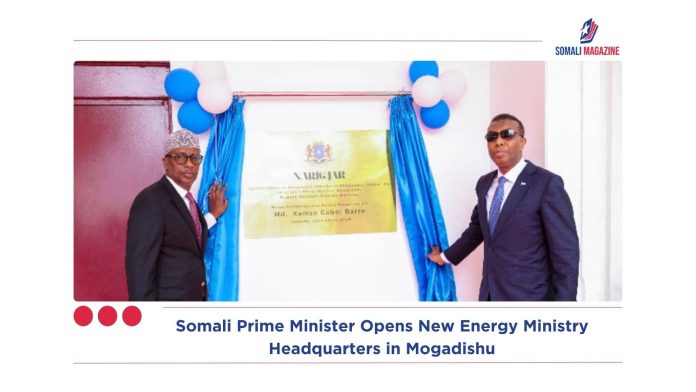
The Somali Prime Minister opens energy ministry headquarters in Mogadishu, marking what officials describe as a step toward strengthening institutional capacity in the country’s power sector. The new facility, inaugurated during an official ceremony, is expected to serve as the central hub for the Ministry of Energy and Water Resources.
According to government representatives, the development is part of broader Somalia energy sector reform efforts aimed at improving coordination, policy implementation, and oversight. Officials indicated that the headquarters will support administrative functions, technical planning, and engagement with domestic and international stakeholders involved in energy projects. However, detailed operational plans for the facility have not been fully disclosed.
Authorities have emphasized the importance of Mogadishu infrastructure development in supporting national recovery and economic growth. The establishment of a dedicated ministry headquarters is presented as an effort to enhance efficiency within government institutions, particularly in sectors considered essential for long-term development. Early reports suggest that the building is equipped to accommodate various departments within the ministry, although specific capacities have not been publicly confirmed.
The Ministry of Energy Somalia has been tasked with addressing challenges related to electricity access, regulatory frameworks, and investment coordination. Analysts note that Somalia’s power sector Somalia remains largely dependent on private providers, with varying levels of access and cost across regions. Strengthening institutional frameworks is often cited as a key step toward improving service delivery and attracting investment.
According to officials, the inauguration reflects a commitment to building governance structures that can better manage energy resources and expand infrastructure. They have also highlighted the role of international partnerships in supporting sector development, though no new agreements were formally announced during the event based on available information.
Experts suggest that while infrastructure such as ministry headquarters can improve administrative capacity, broader progress in the energy sector will depend on policy implementation, financing, and coordination with regional authorities. They caution that tangible improvements in electricity access may take time, particularly given existing structural challenges.
The ceremony was attended by government officials and representatives from relevant institutions, though detailed attendance lists have not been widely published. Observers note that such developments are often symbolic as well as functional, signaling priorities within government planning.
As Somalia continues to pursue reforms in its energy sector, the opening of the new headquarters underscores ongoing efforts to strengthen institutional frameworks. Further updates are expected as authorities outline how the facility will support policy execution and sector-wide improvements.