
Facebook

Twitter (X)

Instagram

Somali Magazine - People's Magazine
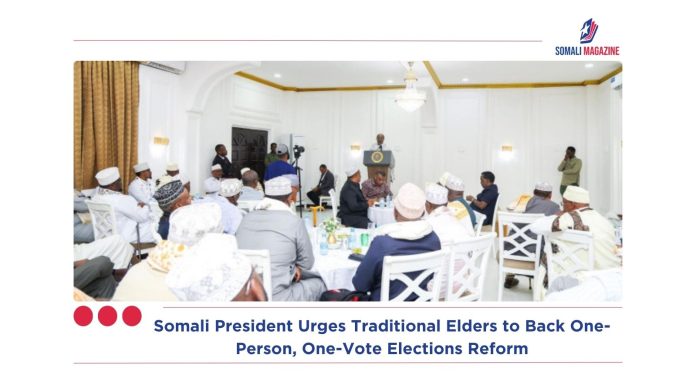
Hassan Sheikh Mohamud has urged traditional elders to support a transition toward one-person, one-vote elections, as Somalia continues efforts to reform its electoral system and expand democratic participation. The appeal highlights the government’s push to move away from indirect voting structures toward a more inclusive model.
Speaking at a recent gathering, the Somali president emphasized the importance of collaboration between political leaders and traditional elders, who play a significant role in the country’s governance framework. According to officials, he called on elders to help build consensus around electoral reforms and support broader public engagement in the political process.
The Somali president one person one vote elections initiative represents a significant shift from Somalia’s current system, which relies heavily on clan-based representation and indirect voting mechanisms. Analysts note that while the proposed reforms aim to enhance democratic legitimacy, they also face logistical, political, and security challenges.
Traditional elders have historically played a central role in Somalia’s political system, particularly in selecting representatives under the clan-based model. Their support is widely seen as critical to the success of any transition toward universal suffrage. Experts suggest that gaining buy-in from these stakeholders will be essential for implementing reforms without destabilizing existing structures.
Government officials have framed the move as part of a broader democratic transition, aimed at strengthening institutions and increasing citizen participation. However, details on the timeline and implementation strategy remain limited, and previous attempts to introduce similar reforms have faced delays.
Observers caution that the Somali president one person one vote elections proposal will require significant investment in infrastructure, voter registration systems, and security arrangements to ensure credible and inclusive elections. International partners have previously supported such efforts, though sustained coordination will be necessary.
At the same time, some political actors have expressed concerns about the pace and feasibility of the transition, highlighting potential risks in a fragile political environment. These differing perspectives reflect ongoing debates about how best to balance reform with stability.
While no final decisions have been confirmed, the president’s call signals renewed momentum toward electoral change. Analysts say the coming months will be critical in determining whether consensus can be achieved among key stakeholders, including elders, political leaders, and civil society.
The Somali president one person one vote elections push underscores a broader effort to redefine governance in Somalia, though its success will depend on inclusive dialogue, careful planning, and sustained commitment from all parties involved.