
Facebook

Twitter (X)

Instagram

Somali Magazine - People's Magazine
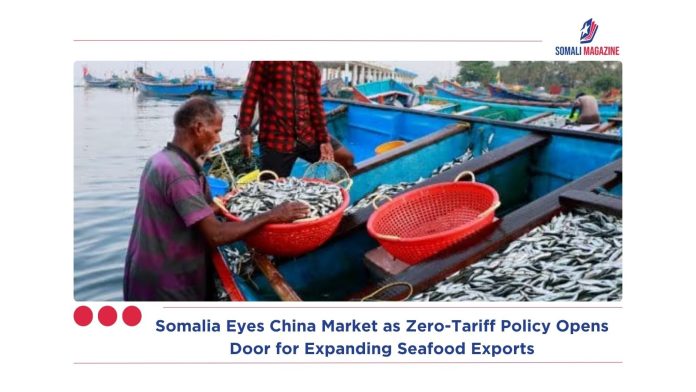
Somalia China seafood exports are gaining renewed attention as a zero-tariff policy introduced by Beijing opens potential pathways for increased trade between the two countries. According to officials and trade observers, the policy is designed to expand access for selected exports from developing nations, including fisheries, which could position Somalia to benefit from one of the world’s largest consumer markets.
Somalia’s long coastline along the Indian Ocean has historically supported a rich fisheries sector, though the industry remains underdeveloped due to infrastructure gaps, illegal fishing concerns, and limited export capacity. With China Africa trade relations continuing to evolve, Somali authorities are now exploring how to scale production and meet international standards required for entry into the Chinese market. Officials have indicated that seafood export opportunities could play a role in broader economic recovery strategies.
Reports suggest that the zero-tariff policy China has extended to certain African nations includes duty-free access for a range of goods, potentially lowering costs for importers and making Somali seafood more competitive. However, trade experts caution that tariff reductions alone may not guarantee immediate export growth. Compliance with quality control, cold chain logistics, and certification requirements remains essential for sustained market access.
Somalia fisheries trade stakeholders have emphasised the need for investment in processing facilities, storage infrastructure, and regulatory oversight to fully capitalise on the opportunity. According to industry analysts, without improvements in these areas, the country may struggle to meet the volume and consistency demanded by large-scale international buyers.
The Somali government has reportedly engaged in discussions with Chinese counterparts and development partners to strengthen technical capacity and attract investment into the fisheries sector. While specific agreements or export volumes have not been officially confirmed, officials suggest that strengthening bilateral trade could diversify Somalia’s export base beyond traditional commodities.
At the same time, experts note that expanding exports to China may carry broader implications for the Somali economy growth trajectory, particularly in coastal regions where employment opportunities are closely tied to fishing activities. Increased demand could support job creation and improve incomes, though sustainable resource management will remain critical to avoid overexploitation.
As Somalia China seafood exports continue to be explored within the framework of new trade policies, the coming months are likely to determine whether the country can translate this opportunity into measurable economic gains. Much will depend on coordinated efforts between government agencies, private sector actors, and international partners to address structural challenges and ensure long-term competitiveness in global seafood markets.