
Facebook

Twitter (X)

Instagram

Somali Magazine - People's Magazine
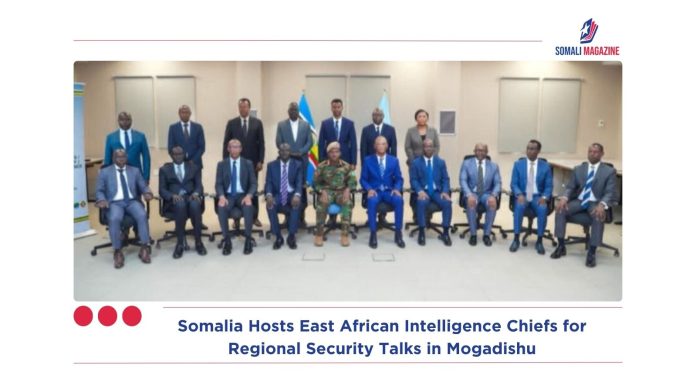
The Somalia East African intelligence chiefs meeting has brought together senior security officials from across the region in Mogadishu, underscoring growing efforts to strengthen coordination against shared threats. According to official reports, intelligence leaders from eight East African Community (EAC) member states convened for a two-day session focused on reviewing regional security developments and enhancing cooperation.
The meeting, held on April 29–30, includes representatives from countries such as Kenya, Uganda, Tanzania, Rwanda, South Sudan, Burundi, the Democratic Republic of Congo, and Somalia. Officials indicated that discussions are centred on improving intelligence sharing, aligning security strategies, and addressing transnational risks, including militant activity, arms trafficking, and border instability.
Somali National Army leadership opened the session, emphasising the importance of coordinated responses to evolving security challenges. According to statements reported from the meeting, officials stressed that stronger intelligence collaboration is essential to sustaining peace and stability across East Africa. The talks are being held under tight security in Mogadishu, reflecting both the sensitivity of the discussions and the significance of the gathering.
The Somalia East African intelligence chiefs meeting also highlights Somalia’s increasing role in regional security frameworks following its accession to the EAC in 2024. Analysts suggest that hosting such high-level engagements signals growing confidence in the country’s institutional capacity and its efforts to rebuild national security structures after decades of instability.
Regional cooperation on intelligence has become a central priority for East African governments, particularly as threats such as extremist groups and cross-border criminal networks continue to affect multiple countries simultaneously. Experts note that fragmented approaches to security have historically limited effectiveness, making coordinated intelligence-sharing mechanisms increasingly critical.
While the discussions are taking place behind closed doors, officials are expected to outline key outcomes in a joint communiqué at the conclusion of the meeting. Early indications suggest that priority areas may include operational coordination, capacity building, and strengthening trust among member states’ intelligence agencies.
Despite the positive tone of cooperation, analysts caution that translating commitments into sustained action will require political will, resource investment, and continued collaboration among participating nations. The Somalia East African intelligence chiefs meeting therefore represents both an opportunity and a test for regional security integration.
As East Africa continues to navigate complex and interconnected security challenges, the outcome of the Mogadishu talks may play a role in shaping future counterterrorism strategies and broader stability efforts across the region.