Facebook

Twitter (X)

Instagram

Somali Magazine - People's Magazine
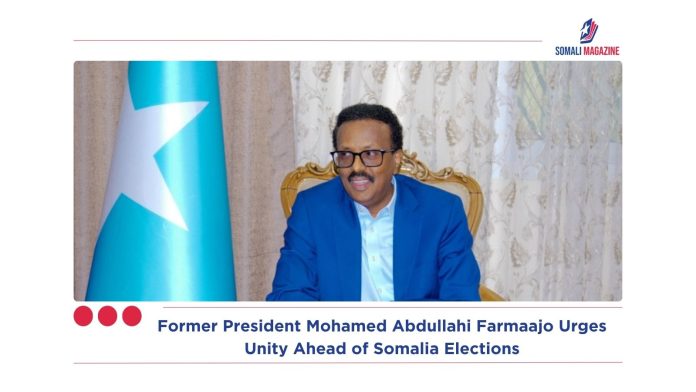
Former President Farmaajo calls for unity as Somalia prepares for upcoming elections, highlighting the need for cooperation among political leaders and institutions during a sensitive period. In a recent statement, Mohamed Abdullahi Farmaajo emphasised the importance of national cohesion, urging stakeholders to prioritise stability and peaceful engagement over political divisions.
According to remarks attributed to the former president, Somalia’s political landscape requires a collective approach to ensure credible and orderly elections. While he did not outline specific policy proposals, his message focused on the broader need for dialogue and mutual understanding among federal and regional actors. Observers note that such appeals are common in pre-election periods, particularly in countries where political processes involve complex coordination between multiple levels of government.
The call comes as Somalia elections draw closer, with authorities and electoral bodies working to finalise timelines and procedures. However, several aspects of the electoral framework remain subject to ongoing discussions, including logistics, security arrangements, and the role of regional administrations. Analysts caution that these factors could influence both the pace and perception of the process if not addressed transparently.
Farmaajo’s statement also reflects continuing debates around political unity Somalia has experienced in recent years. During his presidency from 2017 to 2022, the country navigated both reforms and political tensions, including disagreements between federal and state leaders. While his latest remarks do not directly reference past disputes, they underscore the importance of consensus-building in avoiding similar challenges.
Experts in the Somalia political landscape suggest that public appeals for unity can play a symbolic role in encouraging restraint and cooperation among competing factions. However, they also note that tangible outcomes depend on institutional readiness and adherence to agreed electoral frameworks. Without these elements, calls for unity may have limited practical impact.
Government officials have not issued a formal response to Farmaajo’s comments, and it remains unclear how his message will influence ongoing preparations. Nonetheless, the emphasis on election stability Somalia aligns with broader international expectations for a peaceful and credible electoral process.
As the country moves closer to the polls, the role of political leaders, including former officeholders, is likely to remain significant in shaping public discourse. The appeal by Farmaajo highlights both the opportunities and the challenges facing Somalia as it seeks to navigate its next electoral cycle with stability and cohesion.