
Facebook

Twitter (X)

Instagram

Somali Magazine - People's Magazine
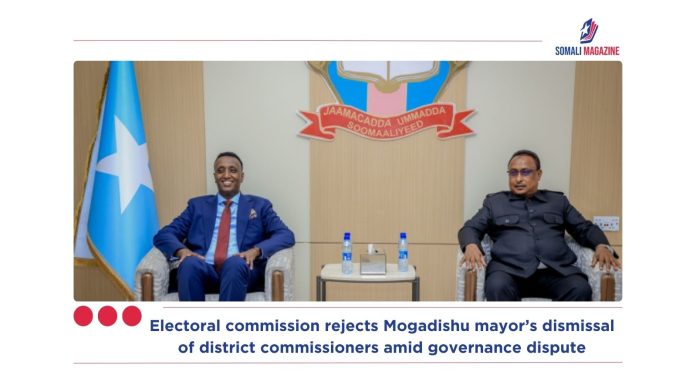
Somalia’s electoral authorities have moved to block a controversial administrative decision after the electoral commission rejects Mogadishu mayor’s dismissal of district commissioners, according to statements cited in local media and official briefings. The development signals a widening institutional dispute within the capital’s governance structure, raising questions about authority, oversight, and the role of electoral bodies in administrative matters.
Reports indicate that the mayor of Mogadishu had announced the dismissal of several district commissioners, a move that prompted immediate scrutiny from stakeholders involved in electoral management and local administration. In response, the electoral commission stated that the action did not align with established procedures, and therefore could not be recognized under current governance frameworks. However, full details of the legal basis for the rejection have not been publicly clarified, and the situation remains subject to ongoing interpretation.
According to early reports, the commission’s position is rooted in concerns about procedural compliance and the potential impact on electoral processes at the district level. District commissioners often play a role in coordinating local administrative and civic functions, including those linked to voter engagement and election logistics. As a result, any sudden leadership changes could have broader implications for governance continuity and election preparedness.
Officials familiar with the matter, as cited in regional reporting, suggest that the disagreement reflects deeper tensions between municipal leadership and national or semi-independent institutions tasked with overseeing democratic processes. While the mayor’s office has not fully detailed the rationale behind the dismissals, some reports suggest the decision may have been linked to internal performance or administrative restructuring. These claims, however, have not been independently verified.
Political analysts note that disputes of this nature are not uncommon in Somalia’s evolving federal and municipal governance systems, where lines of authority can sometimes overlap or remain contested. The electoral commission’s intervention highlights its effort to assert oversight in areas that may affect electoral integrity, even as questions remain about the scope of its mandate.
Government representatives have not indicated whether a formal resolution mechanism will be pursued, but observers expect further consultations between relevant institutions. In the meantime, the rejected dismissals have created uncertainty within several districts, with local officials awaiting clearer direction on leadership status.
As the situation develops, stakeholders are calling for dialogue and adherence to legal frameworks to prevent disruptions to governance and public administration in the capital.