Facebook

Twitter (X)

Instagram

Somali Magazine - People's Magazine
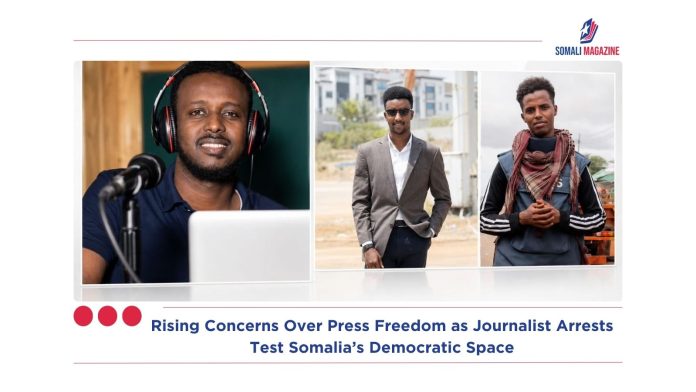
The debate around Silencing the Fourth Estate Somalia journalist arrests has intensified following a series of reported detentions and restrictions involving journalists across Somalia. While authorities have not publicly framed these actions as targeting press freedom, media organisations and rights observers have raised concerns about the broader implications for journalism and democratic space in the country.
According to reports from media advocacy groups, several journalists have faced arrest or temporary detention in recent months, often in connection with their reporting on security operations, political developments, or public accountability issues. Officials in some cases have justified these actions on grounds related to national security or alleged violations of media regulations, though detailed legal explanations are not always publicly documented.
Press freedom organisations monitoring Somalia press freedom have previously highlighted that journalists in the country operate in a challenging environment shaped by insecurity, political tensions, and evolving legal frameworks. These groups caution that repeated detentions can contribute to a climate of self-censorship, where journalists may avoid sensitive topics due to fear of repercussions.
Government representatives have consistently stated that Somalia’s media sector remains active and that regulatory measures are intended to ensure responsible reporting rather than restrict free expression. However, independent observers note that the balance between regulation and freedom remains a subject of ongoing debate, particularly in transitional democracies where institutions are still developing.
Media rights Somalia advocates argue that the treatment of journalists is a critical indicator of democratic health. They stress that a free press plays a central role in accountability, especially in contexts where governance structures are still strengthening. At the same time, some officials maintain that reporting must also respect laws related to security and public order.
Early reports indicate that civil society groups and international partners continue to engage with Somali authorities on media freedom standards, encouraging dialogue on how to protect journalists while maintaining national stability. However, no comprehensive policy shift has been publicly announced in response to recent concerns.
The issue of journalist detentions Somalia reflects a broader tension seen in many transitional political systems, where institutions are still defining the boundaries of press freedom. Analysts suggest that how these cases are handled may influence perceptions of Somalia’s democratic trajectory, particularly as the country continues its state-building efforts.
As discussions continue, the question remains whether Somalia can strike a sustainable balance between security concerns and the protection of journalistic independence. For many observers, the unfolding situation will serve as a key test of institutional maturity and commitment to democratic principles.