
Facebook

Twitter (X)

Instagram

Somali Magazine - People's Magazine
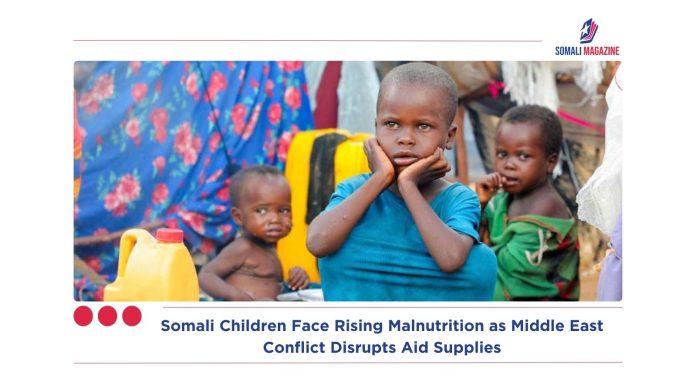
Somali children are facing a deepening malnutrition crisis as disruptions linked to conflict in the Middle East begin to affect humanitarian supply chains, according to aid agencies. The Somali children malnutrition crisis is worsening at a time when millions are already vulnerable due to drought and economic hardship.
Organizations including UNICEF and the World Food Programme have warned that interruptions in aid delivery routes and rising costs are limiting the availability of essential nutrition supplies. According to early reports, delays in shipments and increased transportation expenses have reduced the scale of feeding programs in some regions, though the full extent of the disruption is still being assessed.
Somalia hunger crisis children levels have been elevated for several years, driven by repeated climate shocks, displacement, and limited access to healthcare. Experts note that children under five are particularly at risk, as malnutrition can quickly lead to severe health complications if not treated in time.
Aid groups suggest that the Middle East conflict impact aid has contributed to logistical challenges, especially for shipments passing through key maritime routes. Increased security risks and higher fuel costs have reportedly slowed deliveries of food and medical supplies, although officials caution that multiple factors—including funding shortages and local access constraints—are also contributing to the situation.
Health workers on the ground report that cases of acute malnutrition are rising in some areas, with clinics seeing increased demand for therapeutic feeding programs. However, humanitarian agencies say that resources are stretched, and some facilities may struggle to meet growing needs if supply disruptions persist.
The Somali government has acknowledged the worsening conditions and has called for urgent international support. Officials emphasize the need for coordinated action to ensure that aid continues to reach vulnerable populations, particularly in rural and conflict-affected regions.
Analysts stress that while external conflicts can influence aid delivery, Somalia’s humanitarian challenges are rooted in a combination of long-term structural issues and recurring crises. They caution that without sustained funding and improved access, short-term disruptions could have lasting impacts on child health Somalia outcomes.
As the situation evolves, aid organizations are urging donors to increase support and prioritize uninterrupted supply chains. The coming months are expected to be critical in determining whether interventions can keep pace with rising needs or whether the crisis will deepen further.