
Facebook

Twitter (X)

Instagram

Somali Magazine - People's Magazine
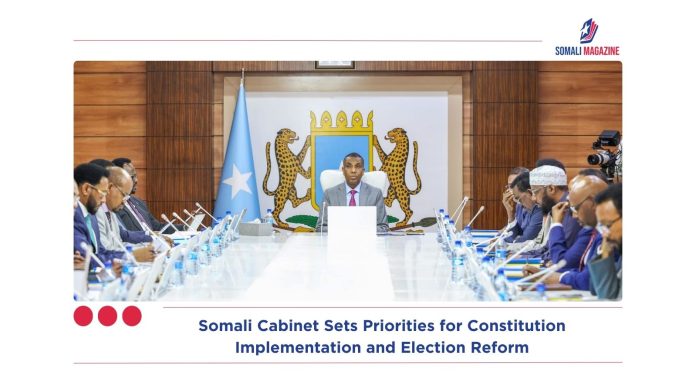
Somalia’s cabinet has outlined new priorities focused on advancing Somalia constitution implementation and accelerating long-delayed election reforms, according to official statements. The move signals renewed efforts by the Federal Government of Somalia to strengthen governance structures and move toward a more stable electoral framework.
According to government communications, the cabinet discussions centered on finalizing key provisions of the provisional constitution, which has remained under review for years. Officials indicated that completing this process is essential for clarifying the distribution of powers between federal and regional authorities, a longstanding issue in Somali governance.
The Somalia constitution implementation process is expected to involve legal reviews, public consultations, and parliamentary approval. While timelines have not been fully detailed, early reports suggest that authorities are seeking to accelerate progress amid growing pressure to resolve institutional uncertainties.
Alongside constitutional matters, Somalia election reform was identified as a critical priority. Government representatives have emphasized the need to transition toward a more direct and transparent electoral system. Analysts note that Somalia’s current model, which relies heavily on clan-based representation, has been a subject of debate, with calls for broader participation and universal suffrage.
Officials have not released a comprehensive roadmap for electoral changes, but statements suggest that reforms may include updates to voter registration systems, electoral laws, and administrative oversight mechanisms. Experts caution that implementing such changes will require significant logistical planning and political consensus, particularly in a complex federal environment.
The Somali cabinet priorities also reflect concerns about maintaining stability during the reform process. Observers point out that constitutional and electoral changes can be sensitive, especially in a context where political agreements often require negotiation among multiple stakeholders, including regional leaders and opposition groups.
International partners have historically supported Somalia’s governance reforms through technical assistance and funding, though the extent of future involvement has not been clarified in recent announcements. Analysts suggest that continued external support could play a role in facilitating both constitution implementation and election reform efforts.
At this stage, much of the detail remains at the policy level, with implementation expected to unfold over time. Experts emphasize that progress will depend on sustained political will, inclusive dialogue, and effective coordination between institutions.
As Somalia moves forward with these priorities, the outcome could shape the country’s political landscape for years to come, particularly in terms of governance structures and the credibility of future elections.