Facebook

Twitter (X)

Instagram

Somali Magazine - People's Magazine
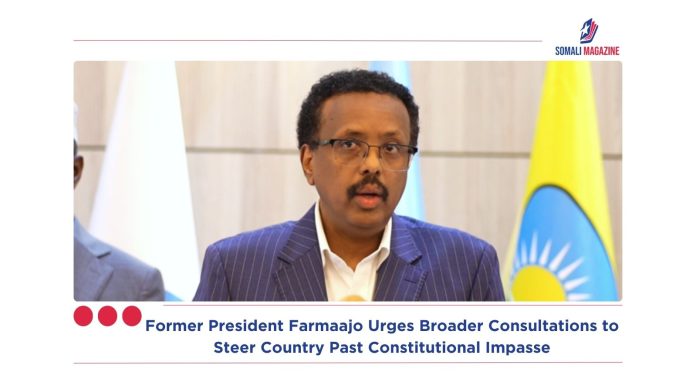
The fragile political landscape of the Horn of Africa has encountered another pivotal test after a prominent statesman issued an expansive plea for broad-based domestic reconciliation. Former President Mohamed Abdullahi Farmaajo has officially published an urgent appeal directed at sitting President Hassan Sheikh Mohamud, alongside other former heads of state and regional leaders, demanding an immediate return to the negotiating table. According to a comprehensive press statement released by his executive office, the former leader warned that the nation has slipped into an increasingly precarious administrative phase. He emphasized that unilateral structural revisions risk exposing the country to deep political setbacks and national fragmentation, highlighting the immediate necessity of inclusive statecraft to bypass a widening political impasse in Somalia.
The timing of Farmaajo’s intervention follows days of intense, localized kinetic clashes between state security forces and opposition-aligned militias within the capital’s residential districts. The underlying friction traces directly back to a highly contested parliamentary vote passed last March, which approved sweeping constitutional amendments that expanded presidential and legislative mandates from four to five years, effectively postponing the anticipated general elections until 2027. While the current administration maintains that these structural modifications are indispensable for guaranteeing comprehensive security operations and organizing a historic one-person, one-vote system, opposition coalitions have vehemently rejected the delay, characterizing the term adjustment as an extra-constitutional overreach that threatens foundational governance pacts.
In his public statement, Farmaajo sharply criti-cized the federal government’s insistence on implementing an electoral roadmap dispute that lacks the full, formalized consent of critical stakeholders. He explicitly pointed out that forcing systemic changes without the participation of key Federal Member States, including Puntland and Jubaland, undermines national cohesion and threatens to undo over a decade of hard-fought state-building milestones. To halt this downward trajectory, the former president has formally proposed a framework for urgent national consultations. This initiative would bring together current authorities, former heads of state, regional state presidents, and leaders from both chambers of the Federal Parliament to collectively design a mutually agreeable governance transition.
International diplomatic bodies and regional security groups have quickly mirrored these calls for inclusive mediation. Representatives from the United Nations and the Intergovernmental Authority on Development have issued coordinated alerts urging all Somali political actors to prioritize public safety over personal or factional agendas. Experts note that while recent localized ceasefires have successfully cleared the streets of Mogadishu of open combat, the fundamental legislative gridlock remains completely active. For ordinary citizens navigating this tense environment, the ultimate efficacy of Farmaajo’s appeal will depend heavily on whether the current leadership is willing to halt its centralized policies and embrace an open-ended dialogue before the political impasse in Somalia permanently damages regional security partnerships.