
Facebook

Twitter (X)

Instagram

Somali Magazine - People's Magazine
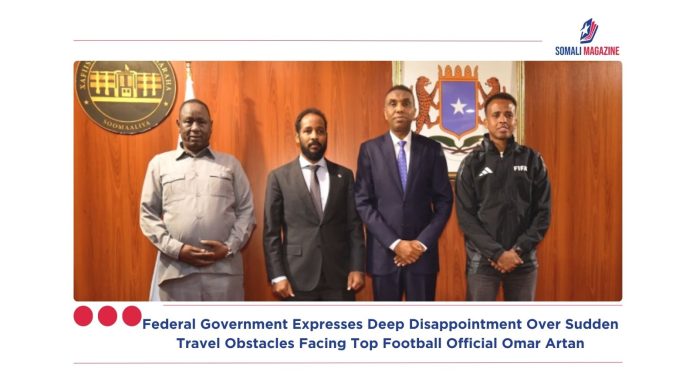
The Federal Government of Somalia has formally expressed its profound regret regarding the decision by United States border authorities to bar prominent FIFA Referee Omar Artan from entering the country. The administrative action has effectively canceled what was anticipated to be a historic milestone for East African sports diplomacy, as the 34-year-old was scheduled to become the first citizen from his nation to officiate a match at the senior men’s World Cup. According to formal correspondence from the Ministry of Youth and Sports, state authorities had engaged in extensive, last-minute talks with both American diplomats and soccer’s global governing body to resolve the entry block, though these interventions ultimately failed to yield a policy reversal.
The decision to restrict the seasoned official has cast a sudden spotlight on the complex intersection of international sports immigration and sovereign security policies. While FIFA referee Omar Artan arrived at Miami International Airport from Istanbul possessing what regional football administrators confirmed was a valid visa, U.S. Customs and Border Protection personnel deemed him inadmissible following standard secondary screening procedures. Federal agency representatives cited unspecified vetting concerns for the denial, adhering to stringent immigration guidelines that apply to travelers from several nations in the Horn of Africa. Because strict tournament regulations mandate that all selected match officials reside and train at a centralized hub in Florida, the entry denial logistically prevented Artan from participating in any matches across the co-hosting territories of Canada and Mexico.
Within Mogadishu, government officials and soccer administrators have publicly defended the integrity of the official, who was named Africa’s top male referee for 2025 by the Confederation of African Football. The sports ministry emphasized that the achievements of FIFA referee Omar Artan remain an undeniable source of national honor, irrespective of the current travel impasse. Meanwhile, the Somali Football Federation noted that it has yet to receive an explicit, formal breakdown of the administrative grounds for the denial from American authorities. Representatives stated they are continually working alongside international bodies to comprehensively analyze the situation and prevent future occurrences from hindering local talent.
For its part, soccer’s global governing body maintained a neutral stance, stating that while it regrets the operational loss of a top-tier professional for the tournament, the organization maintains no structural authority over the domestic visa adjudications or border laws of host nations. As Artan returns to a supportive public reception in Mogadishu, sports analysts suggest the high-profile incident will likely prompt renewed discussions regarding the institutional barriers faced by elite personnel from developing countries. Despite the abrupt exit from this tournament cycle, the sustained Somali government diplomatic efforts underscore a long-term commitment to safeguarding the international progression of its athletic pioneers and cementing its presence within global football officiating milestones.