
Facebook

Twitter (X)

Instagram

Somali Magazine - People's Magazine
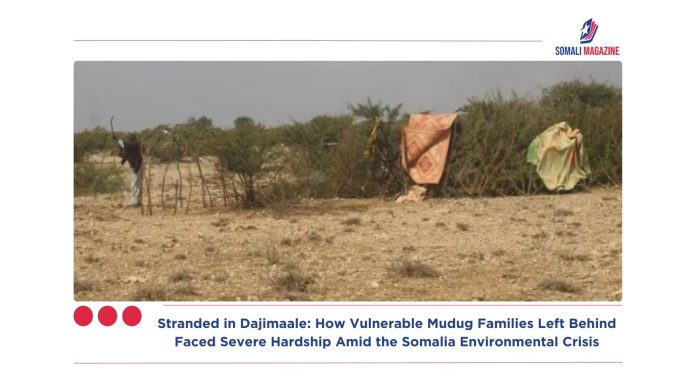
Reports concerning vulnerable Mudug families left behind highlight an escalating humanitarian crisis across the drought-stricken rural plains of central Somalia. According to assessments by independent monitors, more than one hundred households are currently marooned in the isolated village of Dajimaale after the vast majority of local residents migrated to distant urban centers in search of water and pasture. Those left behind consist almost entirely of impoverished widows, elderly residents, and children who lack the financial capital required to fund a household relocation. With local economies thoroughly devastated by successive seasons of failed rainfall, these stranded populations face an immediate, existential threat to their survival.
Local accounts reveal that families are currently dealing with severe water scarcity as regional infrastructure completely collapses under climate strain. The area’s remaining shallow wells are rapidly drying up, producing only a fraction of the water necessary to sustain the remaining inhabitants. Residents reportedly queue for hours before sunrise to secure a single container of water, while the exorbitant cost of trucked water from neighboring zones remains entirely prohibitive for impoverished households. Early field reports indicate that the consumption of untreated, poor-quality water has triggered a swift rise in waterborne illnesses, leaving weak children suffering from severe fevers and infections without access to medical supplies.
This local displacement and entrapment occur against the backdrop of a larger crisis across central Somalia, where the federal government previously declared a national drought emergency. Humanitarian agencies note that acute food insecurity has spiked dramatically, forcing families to survive on single, strictly rationed meals each day. The loss of livestock herds, which historically served as the primary economic foundation for these pastoralist communities, has permanently dismantled local food security. Aid workers warn that while international funding cuts have forced numerous regional health and nutrition facilities to shut down, the demand for emergency survival assistance keeps rising sharply.
The structural entrapment of vulnerable Mudug families left behind underscores a massive gap in regional emergency response frameworks. Relocating a household to the nearest major hub, such as Galkayo, requires substantial transport fees that these destitute pastoralists simply cannot afford. While local elders and community members continue to share dwindling food staples, international relief representatives emphasize that targeted water trucking and medical interventions are urgently required. Without an immediate injection of localized aid, the combination of hunger and spreading disease risks turning the crisis in Dajimaale into an absolute tragedy.