Facebook

Twitter (X)

Instagram

Somali Magazine - People's Magazine
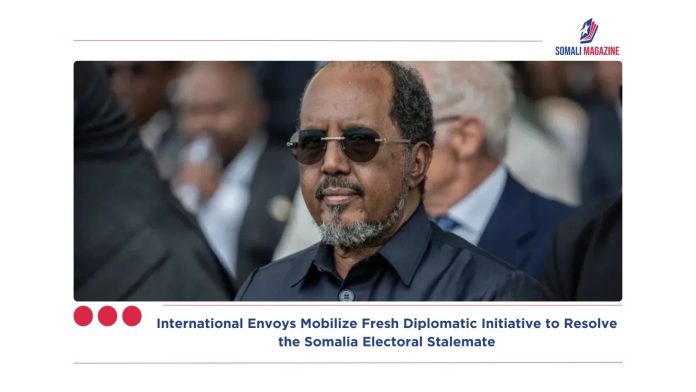
The Somalia electoral stalemate has prompted a coordinated diplomatic intervention from international partners seeking to defuse escalating political tensions in the Horn of Africa. Following the collapse of previous mediation frameworks, global envoys have mobilized a renewed political dialogue to bring federal authorities and opposition coalitions back to the negotiating table. The current political impasse stems from controversial constitutional amendments passed by the Federal Parliament in March 2026, which extended the official terms of both the presidency and legislative bodies from four to five years. While the administration under President Hassan Sheikh Mohamud maintains that this extension is a necessary legal bridge to prepare for direct elections, opposition groups reject the move as an unconstitutional expansion of executive power.
According to statements from diplomatic sources close to the negotiations, the fresh diplomatic initiative targeting the Somalia electoral stalemate is spearheaded by a joint coalition of regional and global stakeholders, including representatives from the United Nations and the African Union. International mediators are focusing their initial efforts on establishing a mutually acceptable framework for an inclusive dialogue that prevents further armed confrontation. The urgency of these talks has intensified following early June security incidents in Mogadishu, where brief urban clashes broke out between government security forces and units aligned with opposition leaders. These events underscored the fragility of the capital’s stabilization progress and demonstrated how rapidly constitutional disputes can devolve into physical conflict.
The political configuration remains deeply fragmented, as the opposition, organized under the Somali Salvation Forum, continues to argue that unilateral modification of the provisional constitution lacks legitimacy. Led by former national leaders, the coalition demands a consensus-driven approach that respects established timelines or returns to a negotiated indirect electoral model. Concurrently, regional administrations within the Federal Member States, particularly Jubaland and Puntland, have expressed deep structural reservations regarding the centralization of electoral authority by the federal government of somalia. This multi-layered dispute has effectively frozen administrative cooperation, complicating not only the planning of the national ballot but also hampering joint counter-terrorism operations against local insurgent groups.
As international envoys accelerate consultative sessions to address the Somalia electoral stalemate, the immediate objective remains securing a verifiable commitment from all major factions to cease hostile rhetoric. External analysts point out that past political transitions in the region have successfully utilized national consultative forums to bypass deeply historical institutional impasses. Whether this latest diplomatic initiative can forge a compromise depends heavily on the willingness of both sides to sacrifice absolute political demands in favor of a stable transition process. The international community continues to emphasize that safeguarding Somalia’s hard-won recovery requires adherence to democratic consensus rather than unilateral mandates.