Facebook

Twitter (X)

Instagram

Somali Magazine - People's Magazine
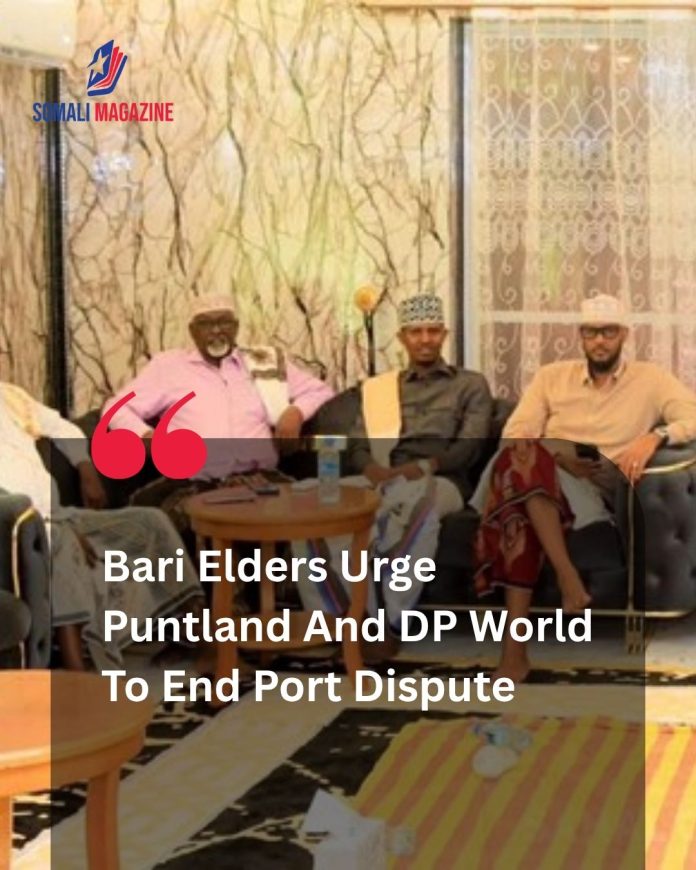
Bari region elders urge Puntland, DP World to end Bosaso port dispute as an intense fiscal stand-off between local commercial entities, state administrators, and the Emirati logistics firm threatens to paralyze the state’s main economic lifeline. Following a critical assembly of community stakeholders, traditional leaders issued a joint statement requesting an immediate suspension of all adjusted import service tariffs to reverse the commercial freeze. The public appeal materializes during the second consecutive week of operational stagnation, which has caused local traders to shutter marketplaces across the city in absolute protest. Traditional leaders warned that the ongoing structural gridlock risks inflicting permanent economic harm across the territory.
The underlying friction stems directly from newly introduced tariffs levied on incoming commercial shipping lines utilizing the regional commercial hub. While local business organizations state that these sudden tariff hikes place unsustainable pressure on everyday consumers already battling high inflation, regional leaders have offered a fundamentally different interpretation. Puntland President Said Abdullahi Deni publicly clarified that the state has not enacted new baseline taxes on the merchant community. Instead, according to state officials, the adjustments target specialized infrastructure service tariffs paid by international vessels, structured specifically to backstop the ongoing expansion of the maritime facility.
Despite state assertions that maritime unloading remains operational, local business networks have maintained a strict, comprehensive boycott of the custom terminals. Deputy finance officials defended the regulatory shift, noting that the rollout of the tariff adjustments had been purposefully delayed for over two years to protect corporate entities from regional shocks. State ministries argue that these incoming funds are mandatory to bankroll the next multi-million-dollar phase of the trade gateway modernization blueprint, which includes constructing an expansive 300-meter shipping terminal alongside customized berths for regional livestock exports.
Nevertheless, civil society networks and community elders emphasize that the immediate human cost of the stagnation cannot be ignored. With key shipments of food, medicine, and fuel currently sitting offshore, economists project a sharp drop in maritime custom revenues, which directly impacts broader state stability and public-sector compensation. To break the dangerous impasse, the traditional elders have formally proposed the rapid creation of a joint dialogue committee. This specialized body would be tasked with reviewing current logistics agreements, protecting the broader public interest, and forging a sustainable compromise that safeguards the long-term viability of the coastal gateway.