
Facebook

Twitter (X)

Instagram

Somali Magazine - People's Magazine
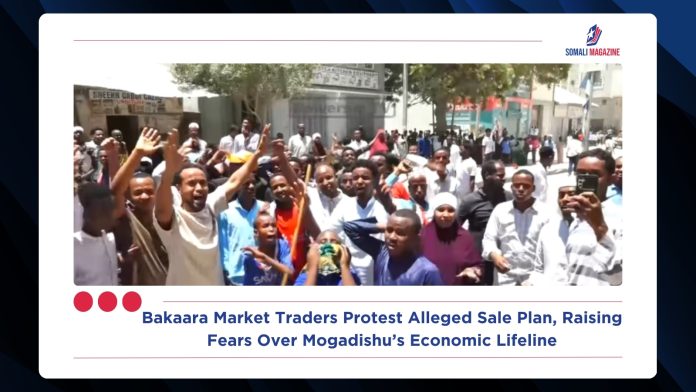
Tensions are rising in Mogadishu as a Bakaara market protest gathers momentum, with hundreds of traders voicing anger over what they claim is a government-backed plan to sell sections of the historic marketplace to private investors. The dispute has reignited longstanding concerns about transparency, land ownership, and the future of Somalia’s largest commercial hub.
Crowds of Mogadishu traders assembled in and around Bakaara market this week, chanting slogans and demanding clarity from authorities. Many say they have operated in the market for decades, building businesses that support thousands of families. For them, the alleged plan represents not just a policy decision, but a direct threat to their livelihoods. Some traders accused officials of failing to consult stakeholders before considering any form of privatization.
Bakaara market, often described as the economic heartbeat of the capital, has played a central role in Somalia’s informal and formal trade networks since the collapse of the central government in 1991. Over the years, it has evolved into a sprawling commercial center where everything from food and textiles to electronics is bought and sold. Any proposed restructuring, analysts say, would have wide-reaching implications for the local economy.
Government representatives have yet to publicly confirm details of the alleged Bakaara market sale, but officials in Mogadishu have previously signaled interest in modernizing key infrastructure and improving revenue collection. Supporters of reform argue that regulated investment could enhance security, sanitation, and organization within the market. However, critics warn that privatization without safeguards could marginalize small-scale traders who form the backbone of the marketplace.
The Somalia market dispute reflects broader tensions between modernization efforts and the realities of an economy heavily dependent on informal trade. Experts note that similar initiatives in other sectors have struggled due to weak regulatory frameworks and limited public trust. In this case, the lack of clear communication has fueled suspicion and unrest among business owners.
As the Bakaara market protest continues, community leaders are calling for dialogue between traders, local authorities, and federal officials. They argue that any development plan must prioritize inclusivity and protect existing businesses. For now, uncertainty hangs over the market, with many traders vowing to continue demonstrations until their concerns are addressed.
The situation remains fluid, but one thing is clear: decisions affecting Bakaara market will resonate far beyond its crowded stalls, shaping the future of commerce in Mogadishu and potentially setting a precedent for how Somalia manages its most vital economic spaces.