
Facebook

Twitter (X)

Instagram

Somali Magazine - People's Magazine
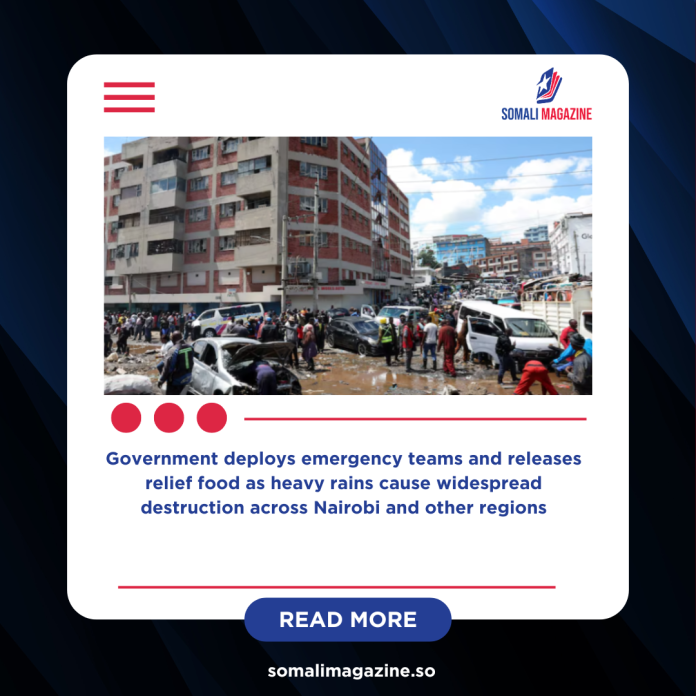
Heavy rains and flooding across Kenya, especially in the capital Nairobi, have claimed at least 42 lives, nearly doubling the earlier reported death toll of 23, according to a government statement released late Sunday. The intense downpour that began on Friday triggered widespread flooding in several parts of the country, leaving destruction in its wake and disrupting daily life for thousands of people.
The floods caused rivers and drainage systems to overflow, leading to dangerous conditions in many neighborhoods. In Nairobi and other affected areas, water quickly filled roads and residential zones, trapping residents and forcing some to flee their homes. Several people drowned in the fast-moving waters, while vehicles were swept away by the strong currents.
The heavy flooding also disrupted transport and operations at major facilities, including the country’s main airport. Flooded roads and damaged infrastructure made it difficult for people to move around, while emergency responders struggled to reach some of the hardest-hit locations.
Government officials said rescue teams have been working around the clock to help those affected and to search for missing victims. Geoffrey Kiringa Ruku, Kenya’s Minister for Public Service and Human Capital Development, said a multi-agency emergency response team, including the military and other government agencies, has been deployed to carry out search and rescue operations across the country.
According to the minister, teams are still working to locate and recover the bodies of those who died in the floods. He said the search mission will continue until all victims are found and accounted for. Emergency workers have been combing flooded areas and rivers while also helping residents who were stranded or displaced.
In addition to the loss of life, the floods have caused widespread damage to property, infrastructure, and livelihoods. Roads, homes, and businesses were affected, leaving many families struggling to recover. Floodwaters swept away vehicles parked along roads or caught in traffic during the storm. Authorities confirmed that at least 172 vehicles carried away by the floods have since been recovered.
The disaster has also raised concerns about food security and support for the families who lost homes or belongings. In response, President William Ruto ordered the immediate release of relief food from the country’s national strategic reserves. The food is being distributed to families and communities that were severely affected by the floods.
Local authorities and humanitarian teams are also assessing the damage in different regions to determine what further support will be required. Many residents are in urgent need of shelter, clean water, and medical assistance after being displaced by the rising waters.
The flooding comes at a time when scientists and climate experts are warning about the growing impact of climate change in East Africa. Researchers say global warming is making extreme weather events such as floods and droughts more frequent and more severe across the region.
Experts explain that climate change is causing rainfall to fall in shorter but more intense bursts, which increases the risk of flash floods in cities and rural areas alike. When large amounts of rain fall within a short period, drainage systems and rivers can quickly become overwhelmed, leading to dangerous flooding.
A study by World Weather Attribution published in 2024 found that climate change has significantly increased the likelihood of extreme rainfall in East Africa. The research concluded that devastating rains in the region are now about twice as likely to occur compared to the past.
As Kenya continues to deal with the aftermath of the floods, authorities are urging residents in vulnerable areas to remain cautious and follow safety advisories. Emergency teams remain on the ground, searching for victims, helping displaced families, and working to restore normal life in the affected communities.