
Facebook

Twitter (X)

Instagram

Somali Magazine - People's Magazine
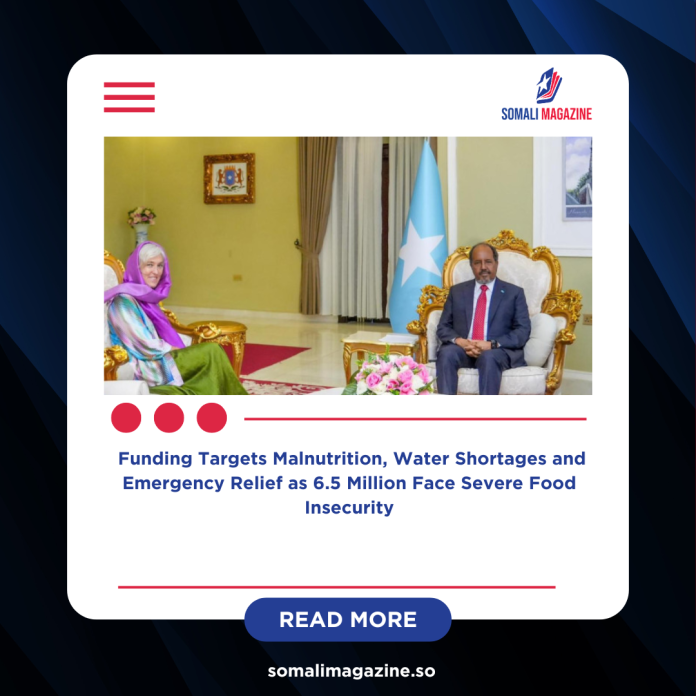
The European Union has announced €63 million in new humanitarian funding for Somalia as millions of people across the country struggle with severe hunger. The support comes at a critical time, with about 6.5 million people — nearly one in three Somalis — expected to face crisis-level food insecurity or worse by the end of March.
In a statement, the EU said the funding will focus on helping the most vulnerable communities affected by ongoing conflict, displacement, drought and rising food prices. The assistance will provide life-saving health and nutrition services, especially for children suffering from severe acute malnutrition. It will also include emergency cash transfers to families, clean water and sanitation services, protection programs for vulnerable groups, and emergency education support for children whose schooling has been disrupted.
The aid will be delivered through the EU’s humanitarian partners working inside Somalia. Officials say this approach is meant to ensure that support reaches those who need it most as quickly and effectively as possible.
The announcement follows new findings from the Integrated Food Security Phase Classification (IPC), which show that hunger is worsening across the country. According to the latest report, around 6.5 million people are projected to experience crisis-level hunger or worse conditions in the coming weeks. The situation is especially alarming for children. An estimated 1.84 million children under the age of five are expected to suffer from acute malnutrition in 2026. Of those, nearly 500,000 are likely to face severe malnutrition, a life-threatening condition if not treated urgently.
Somali government officials and United Nations agencies say several factors are driving the crisis. Ongoing conflict continues to disrupt farming and trade. Water shortages are spreading, particularly in southern and central parts of the country. At the same time, global aid cuts have reduced the amount of humanitarian funding available, making it harder to respond fully to growing needs.
The latest drought has made matters worse. Triggered by below-average rainfall, it has caused widespread crop failures and heavy livestock losses. For many pastoral and farming families who depend on animals and crops for survival, these losses have been devastating. Food prices have also risen sharply, putting basic meals out of reach for many households.
Water shortages are becoming more severe, and experts warn that even if the next rainy season brings average rainfall, it may not be enough to reverse the damage already done. Recovery from repeated droughts takes time, and many families have already exhausted their coping strategies.
Between July and December alone, drought and conflict forced about 278,000 people to leave their homes, according to United Nations estimates. Displacement disrupts livelihoods, separates families from their farms and livestock, and makes it more difficult for aid agencies to reach affected communities. It also places additional pressure on towns and camps where displaced families seek refuge.
Looking ahead, officials caution that the crisis will not end soon. Even if weather conditions improve, around 5.5 million people are still expected to face crisis-level hunger or worse later in 2026. The long-term effects of prolonged drought, conflict and economic hardship will continue to weigh heavily on communities.
The EU said it is taking part in a Global Leadership Roundtable aimed at coordinating emergency efforts after Somalia activated its Food Security Crisis Preparedness Plan. The goal is to strengthen cooperation among international partners and improve the overall response.
With this latest allocation, the European Union has provided more than €750 million in humanitarian assistance to Somalia since 2017. Despite funding shortages affecting humanitarian programs worldwide, the bloc says it remains committed to supporting Somalia at a time when needs are growing faster than available resources.