Facebook

Twitter (X)

Instagram

Somali Magazine - People's Magazine
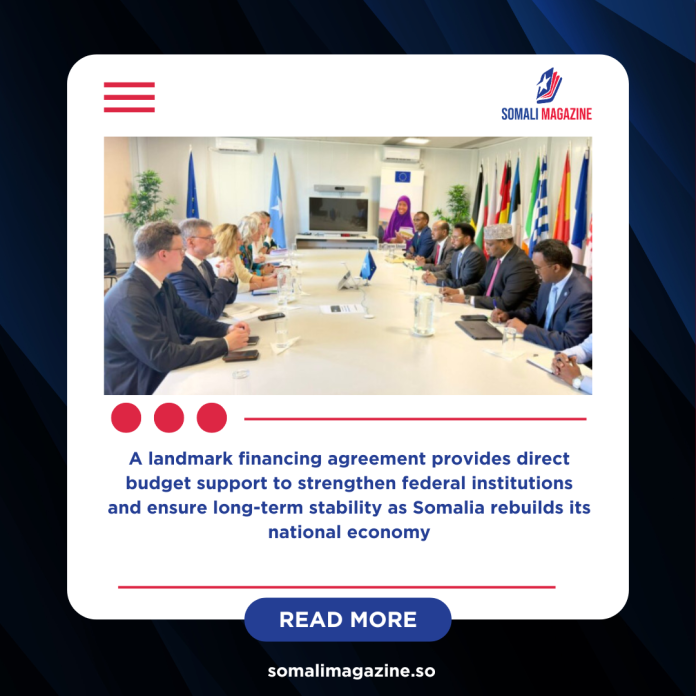
In a significant move to bolster state-building efforts, Somalia and the European Union have entered into a new financing agreement worth €102 million (approximately $110 million). This deal, signed in Mogadishu after high-level discussions, is designed to provide the Somali federal government with the predictable financial support it needs to keep its essential services running while continuing a series of ambitious national reforms. For a country working to move past decades of conflict and institutional instability, this funding represents more than just a check; it is a vote of confidence from the international community in Somalia’s path toward a more stable and self-reliant future.
The agreement was finalized by top officials from both sides, including Somalia’s Minister of Finance, Biixi Imaan Cige, and the Minister of Planning, Investment and Economic Development, Mohamud Abdirahman. The package is carefully aligned with Somalia’s National Development Plan, meaning the money is earmarked for strengthening federal institutions and ensuring the government can meet its day-to-day financial obligations. By providing this direct budget support, the EU is helping the government bridge the gap between its current needs and its long-term goals of economic modernization and improved public service delivery.
Over the last few years, Somalia has worked hard to repair its reputation with international lenders. After decades of being cut off from global finance, the country recently achieved a massive milestone by reaching the completion point of the Heavily Indebted Poor Countries initiative. This achievement cleared a significant portion of its old debts and reopened the doors to the kind of affordable, long-term funding seen in this latest EU deal. Today, the focus has shifted toward making the government more sustainable by improving how it collects local taxes and how it manages the public purse.
Finance Minister Biixi highlighted that this partnership is vital for maintaining economic stability, especially as the government navigates high security costs and the rising expectations of its citizens. The funds allow the state to pay for recurring expenses, like salaries and infrastructure upkeep, while still investing in projects that drive growth. However, this support is not a one-way street. The European Union has made it clear that the funding is tied to continued progress in good governance and fiscal discipline. This accountability ensures that the money is used effectively to build stronger public institutions that can eventually stand on their own.
Ultimately, this €102 million agreement serves as a bridge. It provides the immediate cash flow needed to keep the wheels of government turning, but its true value lies in the long-term stability it encourages. By supporting the federal government’s budget, the EU is helping Somalia move away from a reliance on emergency aid and toward a future where it can fund its own development through a modern, transparent economy. This enduring partnership marks another chapter in Somalia’s journey toward becoming a resilient and functional state for all its people.