
Facebook

Twitter (X)

Instagram

Somali Magazine - People's Magazine
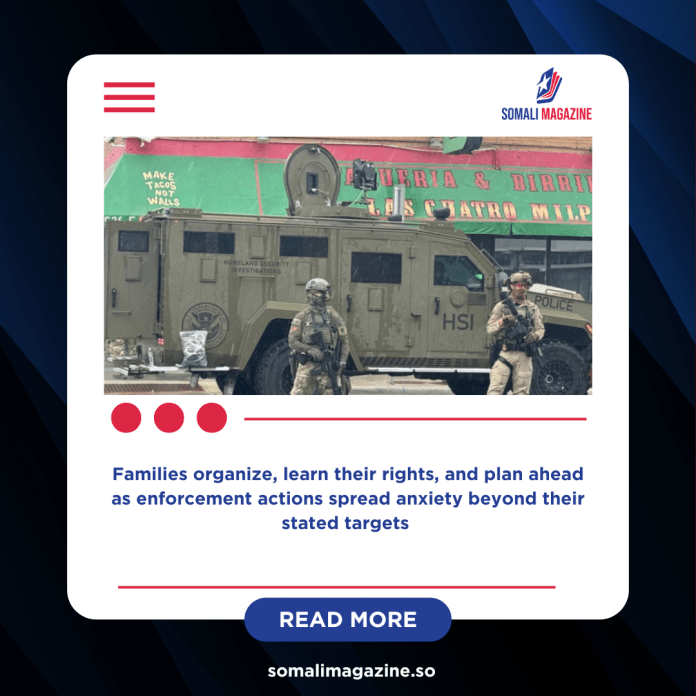
Federal immigration raids across Minnesota have left many Somali families living in fear and uncertainty. In neighborhoods such as Cedar-Riverside in Minneapolis, along Lake Street, and in Rochester, parents are preparing for the possibility that a loved one could be detained without warning. Families are teaching children not to open the door to strangers, keeping important phone numbers close, and organizing key documents so they are ready if something happens.
The concern has grown since the launch of “Operation Metro Surge” on December 1. Immigration and Customs Enforcement says more than 400 people have been arrested across the Twin Cities and other areas, describing the operation as a crackdown on undocumented immigrants with criminal records. However, Somali and Latino communities say the impact has gone far beyond that goal, creating widespread fear and, in some cases, affecting U.S. citizens.
One incident that drew national attention involved a 20-year-old Somali American citizen who was detained in the Cedar-Riverside area by masked federal agents. He was held for about two hours despite repeatedly saying he was a citizen and showing a copy of his passport on his phone. He was later released without charges. Minneapolis city leaders condemned the detention, calling it unconstitutional, while federal authorities defended their actions. For many in the community, the incident confirmed fears that people are being treated as suspects based on how they look or where they come from.
Somalis make up the largest African diaspora community in Minnesota, and most are citizens or legal residents. Even so, daily life has changed. Business owners say customer numbers have dropped sharply as people avoid public places. Students report carrying passports or IDs everywhere and limiting time outside. Protests have taken place outside federal buildings, and labor unions and faith groups have spoken out against deportation practices they say harm families. State leaders have also raised concerns and called for reviews of cases involving detained citizens.
Inside their homes, families are focusing on basic rights. Under U.S. law, immigration officers generally cannot enter a private home without permission or a warrant signed by a judge. Advocates advise people not to open the door, to ask officers to identify themselves, and to request to see any warrant through a window or under the door. If the warrant is not signed by a judge or does not match the home, residents can refuse entry.
People are also being reminded of their right to remain silent. They do not have to answer questions about their immigration status, place of birth, or how they entered the country. Many families keep a simple sentence near the door, in English and Somali, stating that they choose to remain silent and want to speak to a lawyer. Signing documents without legal advice is strongly discouraged, as some papers can waive important rights.
At workplaces, the fear is similar. ICE can enter public areas of businesses but cannot enter employee-only spaces without proper authorization. Workers are advised not to run, not to answer questions about their status, and not to sign anything without speaking to a lawyer. Employers are encouraged to clearly mark private areas and decide who will speak to officers if they arrive.
Encounters have also happened in public spaces such as streets and restaurants. In these situations, people can ask if they are free to leave. If they are detained, they still have the right to remain silent and request a lawyer. Memorizing at least one phone number is important in case a phone is taken away.
Many families are also planning ahead for their children. Parents are choosing trusted caregivers, gathering vital documents like passports and school records, and preparing small emergency bags with essentials. They are having calm conversations with children about what to do if a parent is suddenly not home.
For Somali Minnesotans, the situation has raised deeper questions about fairness and equal protection under the law. While federal authorities describe the raids as targeted, the lived experience in these communities is one of fear and constant readiness. Community groups say that knowing basic rights cannot stop raids, but it can help families protect themselves, stay connected, and face an uncertain situation with a plan instead of panic.