
Facebook

Twitter (X)

Instagram

Somali Magazine - People's Magazine
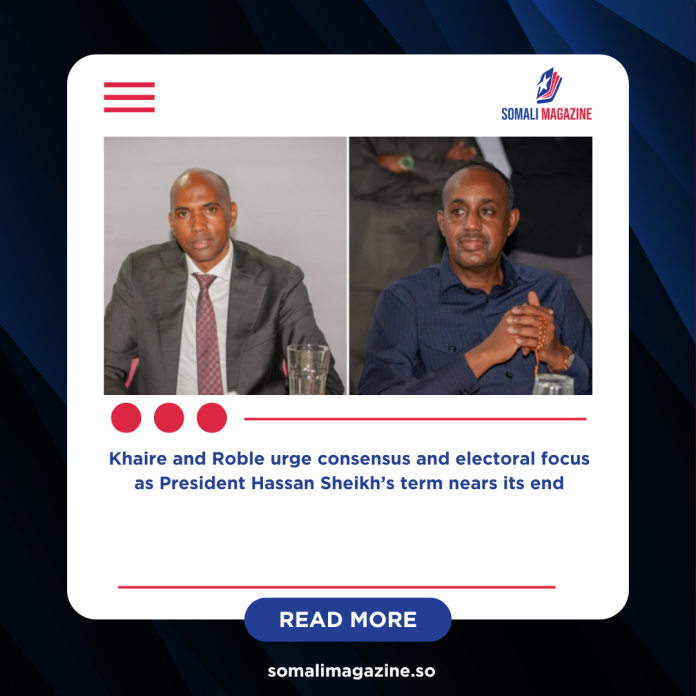
Two former Somali prime ministers have strongly criticized the federal government over how it is handling constitutional and political reforms, warning that the short time left before the end of the current administration is not enough to solve the country’s biggest challenges.
Speaking in Mogadishu on Wednesday, former Prime Minister Hassan Ali Khaire said it is unrealistic to expect the government to complete major national tasks within the three months remaining in its term. According to him, finalizing the Constitution, strengthening national unity, defeating terrorism, and responding effectively to the ongoing drought crisis are complex issues that cannot be rushed.
Khaire stressed that building a constitution requires careful consultation and agreement among different political actors and communities. He noted that Somalia is a country with diverse opinions and political interests, and such differences cannot be resolved overnight. In his view, lasting unity and stability depend on open dialogue and consensus, not quick decisions made under time pressure.
He also argued that defending and stabilizing the Somali state requires clear agreements on governance and how the country should manage the transition from one administration to the next. Without such understanding, he warned, political disagreements could deepen and create further instability.
Instead of pushing through major constitutional changes in the final months, Khaire suggested that the government should focus on agreeing on a clear and widely accepted electoral framework. He said the remaining time should be used to ensure that the upcoming electoral process is transparent, inclusive, and based on consensus. According to him, this would help protect the country from political uncertainty and possible chaos.
Another former prime minister, Mohamed Hussein Roble, also expressed concern about the current political direction. He called on President Hassan Sheikh Mohamud to lower political tensions and promote reconciliation among leaders and communities.
Roble urged the president to take on the role of a mediator who brings people together rather than deepening divisions. He emphasized the importance of unity, describing it as rooted in Somali brotherhood and shared identity. In his remarks, he encouraged the government to pause constitutional amendments that do not have broad political support. He warned that moving forward without agreement could increase mistrust and widen existing political rifts.
Their comments come at a time when the federal parliament is moving ahead with a controversial review of the Provisional Constitution. Lawmakers recently completed debate on one chapter and began discussions on another during a joint session of the two chambers. The review process includes proposed amendments to key articles that define the structure of Somalia’s federal system, the relationship between the central government and federal member states, and the division of powers.
These proposed changes have triggered strong reactions from opposition leaders and some regional administrations. Critics argue that altering fundamental parts of the Constitution without full consensus could weaken cooperation between the federal government and member states. Supporters, however, believe reforms are necessary to clarify responsibilities and strengthen national governance.
As President Hassan Sheikh’s term approaches its end in about three months, the debate over constitutional reform and the future electoral model has become more intense. Political leaders are increasingly concerned about how the transition will be managed and whether disagreements could disrupt stability.
The warnings from the two former prime ministers highlight broader anxieties within Somalia’s political landscape. With limited time remaining, many are questioning whether the government should prioritize long-term structural reforms or focus on ensuring a smooth and peaceful political transition. The coming weeks are likely to play a crucial role in shaping the country’s direction and maintaining stability during this sensitive period.