Facebook

Twitter (X)

Instagram

Somali Magazine - People's Magazine
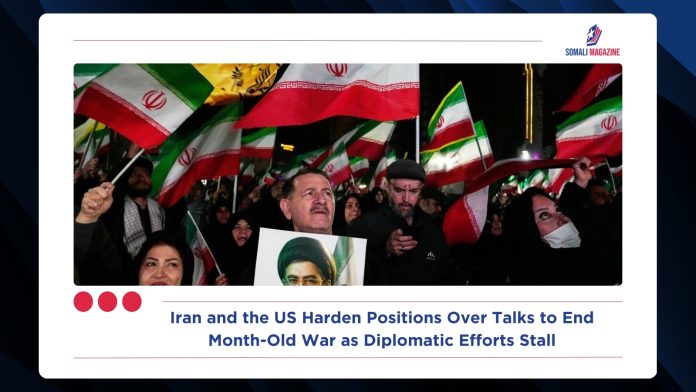
Iran and the US harden positions over talks aimed at ending the nearly month-old war, signaling a deepening diplomatic deadlock that is raising concerns across the international community. As negotiations struggle to gain traction, both sides have adopted firmer stances, complicating efforts to de-escalate a conflict that has already destabilized parts of the region.
Officials in Iran have reiterated their demands for guarantees and concessions, while the United States has maintained that any agreement must address broader security concerns, including regional stability and compliance with international frameworks. The widening gap between the two positions has cast doubt on the immediate prospects for a negotiated resolution.
Diplomatic sources indicate that recent rounds of talks have been marked by cautious exchanges rather than substantive breakthroughs. While intermediaries continue to facilitate dialogue, there is growing frustration over the pace and direction of the negotiations. Analysts point out that the longer the conflict persists, the more complex it becomes to reach a consensus that satisfies both parties.
The standoff comes against a backdrop of long-standing tensions between Washington and Tehran, particularly over nuclear negotiations Iran and regional influence. Previous agreements, including efforts to curb nuclear activity, have faced setbacks over the years, contributing to mutual distrust. This historical context continues to shape the current impasse, as each side remains wary of making concessions without clear assurances.
On the ground, the impact of the conflict is becoming increasingly evident. Reports from affected areas highlight disruptions to civilian life, economic strain, and rising humanitarian concerns. International organizations have called for restraint, urging both nations to prioritize diplomatic talks war over continued escalation. However, the absence of tangible progress has left many observers concerned about the potential for further instability.
Global powers and regional actors have also weighed in, emphasizing the broader implications for Middle East tensions and global security concerns. The conflict’s ripple effects are being felt in energy markets, trade routes, and geopolitical alliances, underscoring its significance beyond the immediate region.
Despite the hardened rhetoric, experts suggest that diplomacy remains the only viable path forward. Backchannel communications and quiet negotiations are reportedly ongoing, offering a glimmer of hope that a breakthrough, however limited, could still be achieved. The challenge lies in bridging the fundamental differences that have defined the relationship between the two nations for decades.
As Iran and the US harden positions over talks, the situation remains fluid, with each development closely watched by the international community. The coming weeks are likely to be critical in determining whether diplomacy can prevail or whether the conflict will continue to escalate with far-reaching consequences.