
Facebook

Twitter (X)

Instagram

Somali Magazine - People's Magazine
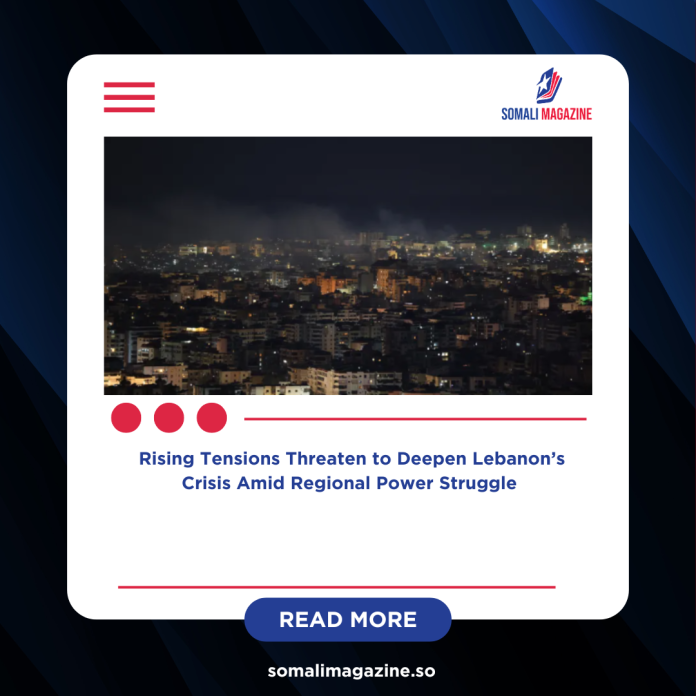
Israeli warplanes carried out air strikes on Beirut after Hezbollah said it launched a rocket and drone attack on a military base near Haifa in northern Israel. The exchange marks a serious escalation in tensions between the two sides, raising fears that the conflict could expand further across the region.
Hezbollah, the Iran-backed armed group based in Lebanon, said early Monday that its attack was a response to what it described as ongoing Israeli aggression. The group claimed it acted in retaliation for the killing of Iran’s Supreme Leader, Ayatollah Ali Khamenei, and said it was defending Lebanon and its people. In a statement, Hezbollah said Israel’s repeated strikes on Lebanese territory and the targeting of its leaders and members gave it the right to respond. The group also warned that Israel could not continue what it called a 15-month campaign without facing consequences.
Israel responded quickly. Air strikes hit areas in southern Beirut, which is considered a Hezbollah stronghold. Lebanese media also reported Israeli attacks in several villages in southern Lebanon and in the Bekaa Valley in the east. The Israeli military said it was carrying out strong operations against Hezbollah across Lebanon and would not allow the group to threaten northern Israel or harm its residents. It accused Hezbollah of dragging Lebanon into further destruction and said the responsibility for the escalation lay with the armed group.
Later, Israel said it had targeted senior Hezbollah members in Beirut and a key figure in southern Lebanon, but it did not provide further details. At the same time, the Israeli military issued evacuation warnings for residents in more than 50 villages in southern Lebanon and parts of the Bekaa Valley, including the town of Bint Jbeil. People were told to leave their homes and stay at least one kilometer away from certain buildings. Such large-scale evacuation notices have raised concern among civilians who fear wider fighting.
The latest violence comes despite a ceasefire agreement reached in November 2024 between Israel and Hezbollah. Since then, Israel has continued carrying out near-daily strikes in Lebanon, saying it is targeting threats from Hezbollah. The Lebanese group had largely avoided responding to these attacks in recent months and had called on the Lebanese government to step in and protect the country.
Lebanon is already facing deep economic and political problems, and many fear that renewed fighting could make the crisis worse. The government in Beirut has repeatedly asked the international community to pressure Israel to stop violating Lebanese sovereignty. In January, Lebanese officials submitted a complaint to the United Nations, documenting more than 2,000 alleged Israeli violations over a three-month period.
The situation inside Lebanon is also complicated. Last year, the government issued a decree calling for Hezbollah to disarm, arguing that only the state should control weapons. Hezbollah rejected the order, saying its arms are necessary to defend the country from Israeli attacks. The group operates independently from the Lebanese government and has significant military strength, though it was weakened during the 2024 war, when many of its senior military and political leaders were killed.
Lebanese Prime Minister Nawaf Salam criticized Hezbollah’s latest attack, calling it irresponsible and dangerous. He said the strike could give Israel an excuse to continue its military operations in Lebanon and warned against dragging the country into another destructive conflict. Salam said the government would take necessary steps to protect citizens and hold those responsible accountable.
The growing confrontation is part of a broader regional struggle involving Israel, the United States, Iran, and Iran’s allied groups. As both sides exchange attacks, concerns are mounting that the conflict could spiral further, placing more civilians at risk and deepening instability in an already fragile region.