Facebook

Twitter (X)

Instagram

Somali Magazine - People's Magazine
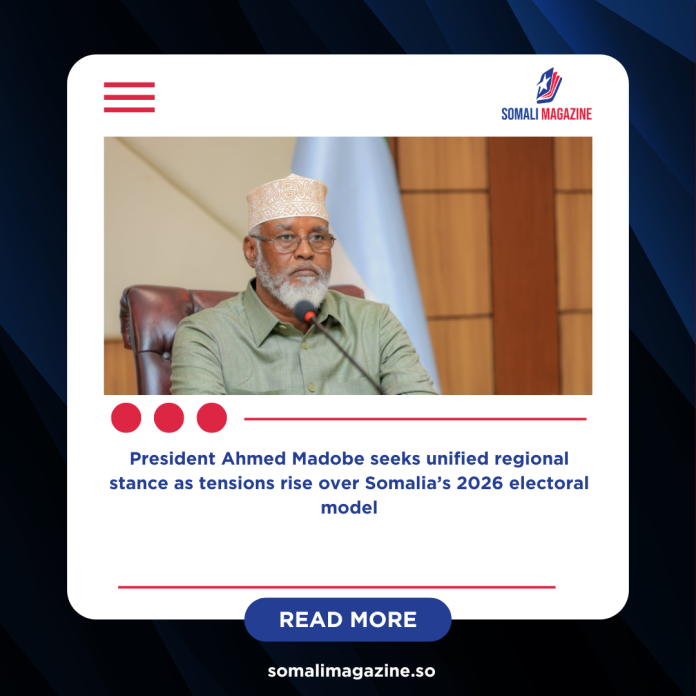
Jubaland President Ahmed Mohamed Islam Madobe has called on federal lawmakers from his state to attend a consultative meeting in Kismayo as political tensions continue to rise over Somalia’s electoral process.
In a letter dated March 1, 2026, the Office of the President of Jubaland invited members of both houses of the Federal Parliament who represent Jubaland constituencies to join discussions focused on the country’s political situation and preparations for the 2026 elections. The meeting is expected to bring together senators and members of parliament to review recent developments and agree on a common position.
The invitation comes at a time of growing uncertainty about how Somalia will conduct its next elections. Disagreements between the federal government in Mogadishu and regional administrations, particularly Jubaland and Puntland, have intensified in recent weeks. These tensions have raised fears that the country could face parallel political processes or competing administrative decisions if consensus is not reached soon.
According to the letter, the Kismayo meeting aims to strengthen coordination among Jubaland leaders and ensure they are united in their approach to key national issues. The presidency emphasized the importance of aligning views on what it described as Somalia’s political future and the broader development of the state. Officials believe that speaking with one voice will give Jubaland stronger influence in ongoing national discussions.
President Madobe urged lawmakers to take the invitation seriously and actively participate in shaping a shared strategy. With the 2026 elections approaching, he stressed the need for cooperation and clarity during what is expected to be a sensitive political transition period. Many observers see the coming months as crucial for determining whether Somalia can move forward with stable and widely accepted elections.
The move by Jubaland follows a similar step taken by Puntland President Said Abdullahi Deni, who recently invited federal parliamentarians from his state to Garowe for talks on the ongoing political impasse. However, that meeting drew controversy after a plane carrying Puntland lawmakers was reportedly ordered to return to Mogadishu. The incident further strained relations between the federal government and regional authorities, highlighting the fragile state of communication between the sides.
At the center of the dispute is the federal government’s proposal to shift to a one-person, one-vote electoral system. The government argues that this reform is a necessary step toward full democratization and a move away from the clan-based indirect voting model that has been used in recent years. Supporters say the new system would give ordinary citizens a direct say in choosing their leaders and strengthen accountability.
However, critics, including leaders in Jubaland and Puntland, question whether the country is ready for such a transition. They argue that ongoing security challenges and limited time before current mandates expire make it difficult to organize nationwide direct elections. Some regional officials have expressed concern that rushing the process without full agreement could create confusion or instability.
As political discussions continue, the planned meeting in Kismayo is seen as part of broader efforts by regional states to coordinate their positions and protect their interests. Whether these consultations will ease tensions or deepen divisions remains to be seen. What is clear is that Somalia stands at an important crossroads, and decisions made in the coming months could shape the country’s political direction for years to come.