
Facebook

Twitter (X)

Instagram

Somali Magazine - People's Magazine
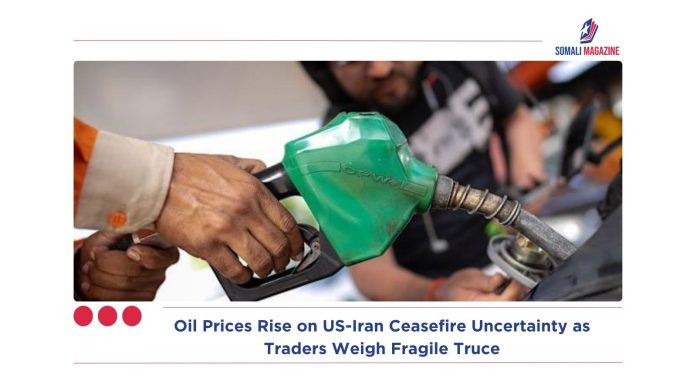
Oil prices rise US-Iran ceasefire developments have become a focal point for global markets, as traders closely monitor the fragile truce between the United States and Iran. The temporary pause in hostilities has introduced a degree of uncertainty, with investors weighing the likelihood of sustained calm against the risk of renewed escalation.
In recent trading sessions, crude oil prices have edged higher, reflecting concerns that the ceasefire may not hold. Analysts point out that even a brief disruption in Middle East stability can significantly influence global oil markets, given the region’s central role in energy production and supply chains. The current situation has prompted cautious optimism, tempered by the recognition that tensions remain unresolved.
The oil prices rise US-Iran ceasefire narrative is closely tied to broader geopolitical dynamics. The Middle East has long been a critical hub for energy exports, and any indication of conflict or instability tends to trigger immediate reactions in commodity markets. Traders often respond not only to actual supply disruptions but also to perceived risks, which can drive volatility even in the absence of concrete changes on the ground.
Energy market volatility has been a defining feature of recent months, with fluctuations driven by geopolitical developments, production decisions by major oil-producing nations, and shifts in global demand. The fragile ceasefire adds another layer of complexity, as market participants attempt to interpret signals from both Washington and Tehran regarding their intentions during the two-week pause.
Experts suggest that the current price movements reflect a balancing act. On one hand, the ceasefire reduces the immediate threat of large-scale conflict, which could have caused a sharp spike in prices. On the other hand, its temporary nature means that uncertainty persists, keeping markets on edge. This dual dynamic is contributing to moderate but sustained upward pressure on crude oil prices.
For economies that rely heavily on energy imports, rising oil prices can have significant implications. Increased costs can affect everything from transportation and manufacturing to inflation and consumer spending. Conversely, oil-exporting countries may benefit from higher prices, though this advantage is often offset by the broader risks associated with regional instability.
The oil prices rise US-Iran ceasefire situation also highlights the interconnectedness of global markets. Developments in one region can quickly ripple across the world, influencing economic conditions far beyond the immediate area of conflict. As a result, policymakers and businesses alike are closely watching the evolving situation.
Looking ahead, much will depend on whether diplomatic efforts can extend the ceasefire or lead to more comprehensive agreements. For now, the market response suggests cautious vigilance, with traders prepared to react swiftly to any changes in the geopolitical landscape.
As the truce continues, the oil prices rise US-Iran ceasefire dynamic will remain a key indicator of how global energy markets interpret risk, stability, and the prospects for lasting peace in one of the world’s most strategically important regions.