
Facebook

Twitter (X)

Instagram

Somali Magazine - People's Magazine
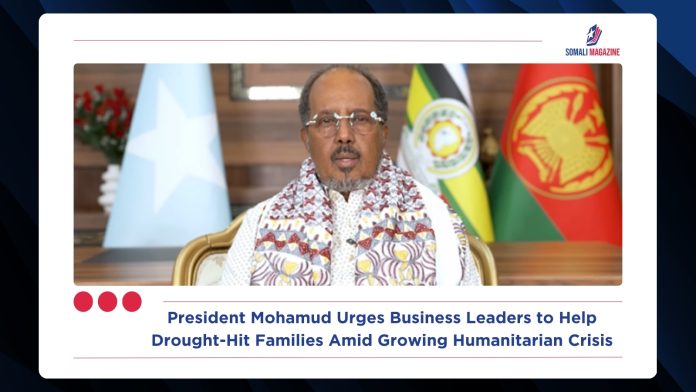
President Mohamud urges business leaders to help drought-hit families, calling for urgent collective action as Somalia grapples with one of its most severe climate-related crises in recent years. Speaking during a high-level engagement with members of the private sector, Hassan Sheikh Mohamud emphasized the critical role businesses can play in supporting vulnerable communities facing acute food and water shortages.
The Somalia drought crisis has intensified due to consecutive failed rainy seasons, leaving millions at risk of hunger and displacement. According to humanitarian agencies, large parts of the country are experiencing severe food insecurity, with rural communities particularly affected. In this context, the president’s appeal to the business community support network reflects a broader push to mobilize domestic resources alongside international aid.
Government officials have acknowledged that while humanitarian aid Somalia remains essential, local partnerships are equally important in ensuring timely and effective responses. Businesses, especially those involved in logistics, agriculture, and finance, are seen as key players in delivering relief and sustaining recovery efforts. The president urged companies to contribute through donations, food distribution, and investment in long-term resilience initiatives.
The call also highlights the growing impact of the climate crisis Horn of Africa, where changing weather patterns have disrupted traditional livelihoods. Livestock losses, crop failures, and water scarcity have compounded economic challenges, placing additional strain on already fragile communities. Experts warn that without coordinated intervention, the situation could worsen, leading to deeper humanitarian and economic consequences.
In his remarks, President Mohamud stressed that addressing food insecurity Somalia requires a united national effort. He pointed to past instances where collaboration between government institutions and private enterprises helped mitigate crises, suggesting that a similar approach is needed now. The emphasis on shared responsibility aims to bridge gaps in response capacity and accelerate relief efforts.
International organizations have welcomed initiatives that encourage domestic engagement, noting that sustainable solutions often depend on local ownership and participation. However, they also caution that the scale of the current crisis demands continued global support, particularly in funding emergency operations and supporting displaced populations.
As President Mohamud urges business leaders to help drought-hit families, the message resonates across sectors, underscoring the urgency of the moment. For many Somali families, immediate assistance could mean the difference between survival and further hardship. The coming weeks will likely determine how effectively this call to action translates into tangible support on the ground.