
Facebook

Twitter (X)

Instagram

Somali Magazine - People's Magazine
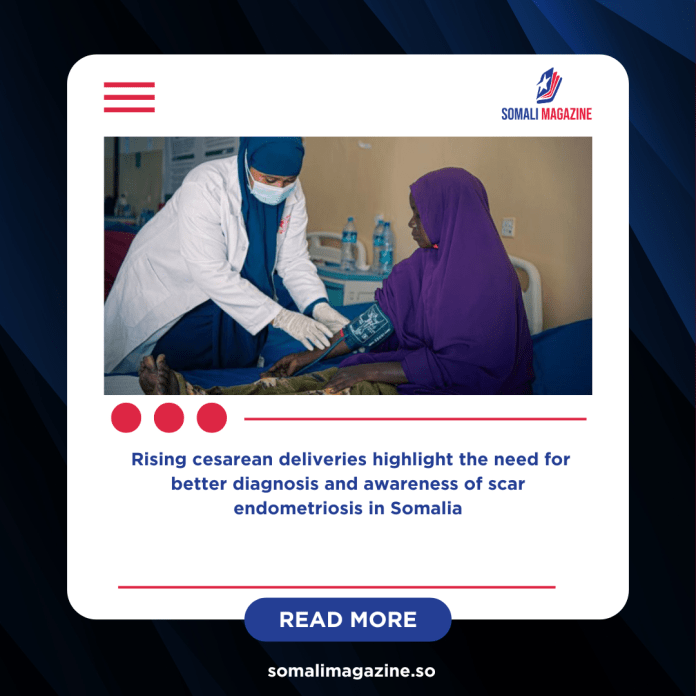
Doctors in Mogadishu have documented a rare medical condition after a 30-year-old Somali woman developed endometrial tissue inside the scar of her cesarean section. The case, published by Dr. Abdirahman Omar Moallim of Kaafi Hospital and Dr. Mohamed Ali Kahiye of Sahan Diagnostic Center, highlights a complication that is not commonly recognized in Somalia but is becoming more relevant as the number of C-section deliveries increases across the country.
The condition, known as scar endometriosis, happens when tissue that normally grows inside the uterus becomes implanted in a surgical incision. This tissue responds to the body’s monthly hormonal cycle, causing pain that appears and worsens during menstruation. Although global studies show that scar endometriosis occurs in a small percentage of cesarean deliveries, it is often missed in countries with limited diagnostic tools, and Somalia is no exception.
According to the report, the woman developed a painful lump near the right side of her C-section scar three years after her last delivery. The lump measured about 4 by 3.5 centimeters and became noticeably more painful during her menstrual periods. This pattern is a key warning sign because it reflects the behavior of endometrial tissue, which thickens and sheds in response to monthly hormonal changes.
Because the symptoms can resemble other conditions such as a hernia, infection, or scar tissue buildup, many women go undiagnosed for long periods. The doctors noted that in low-resource settings, where imaging services are limited and follow-up care is inconsistent, such cases are often mismanaged or mistaken for more common problems. This delays treatment and allows the condition to worsen, causing unnecessary pain and stress for patients.
In this case, ultrasound imaging helped identify the mass as a solid lesion consistent with scar endometriosis. Surgeons then removed it through a wide excision, ensuring that the affected tissue and surrounding margins were cleared. Laboratory analysis confirmed the presence of endometrial glands inside fibrous tissue. After the surgery, the patient recovered well, and by her three-month follow-up, she reported no pain or recurring symptoms.
The authors of the report emphasized that scar endometriosis is likely underdiagnosed in Somalia, just as it is in many parts of Kenya, Ethiopia, and the wider Horn of Africa. Many healthcare facilities in the region face challenges such as limited access to ultrasound, a shortage of pathology services, and gaps in surgical training. These limitations make it difficult for clinicians to confidently diagnose unusual complications from common procedures like cesarean deliveries.
As the number of C-sections rises, especially in major cities, medical workers are more likely to encounter conditions that were previously considered rare. The doctors argue that improving diagnostic awareness is essential. They recommend better training for frontline clinicians, stronger post-operative follow-up systems, and better surgical practices to reduce the chances of endometrial tissue being transferred into an incision during delivery.
They also stress that the most successful treatment for scar endometriosis is complete surgical removal. While hormone-based therapy can temporarily reduce symptoms, it does not cure the condition and carries a higher risk of recurrence. For that reason, early recognition is key: the sooner the condition is identified, the easier it is to treat effectively.
The report concludes that improving maternal healthcare in Somalia requires more than increased access to cesarean delivery—it also requires careful attention to the complications that can follow. As the healthcare system continues to expand and modernize, rare conditions like scar endometriosis will need to be recognized more quickly to protect women’s health and prevent long-term suffering.