Facebook

Twitter (X)

Instagram

Somali Magazine - People's Magazine
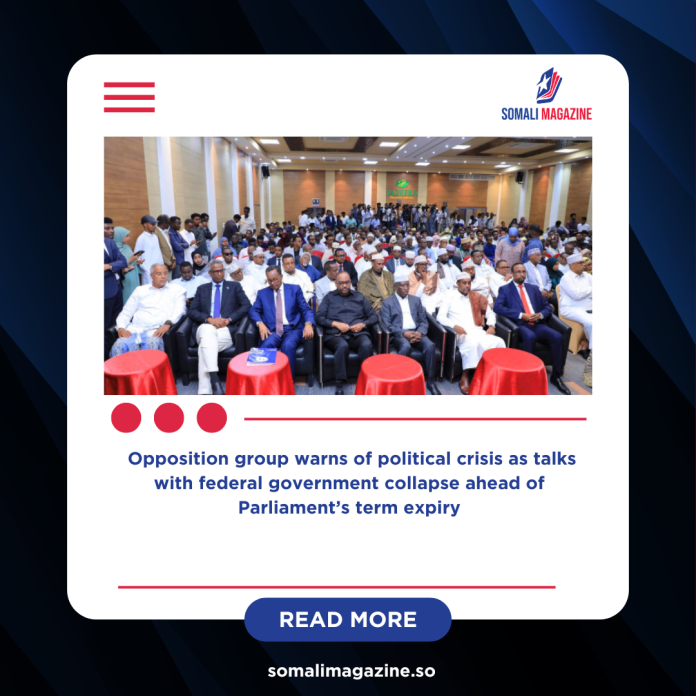
Somalia’s opposition-aligned Somali Future Council has announced plans to hold a high-level meeting on April 10, saying the country’s statehood is at risk after talks with the federal government collapsed. The decision came after a conference in Mogadishu that brought together members of the Federal Parliament, political leaders, and representatives from different parts of society.
In a statement issued after the gathering, the Council said discussions and legal documents presented at the conference raised serious concerns about the ongoing constitutional review process. According to the group, the current process does not follow Article 134 of Somalia’s Provisional Constitution, which clearly sets out how constitutional amendments should be handled. The Council argues that any changes to the constitution must strictly follow these rules to protect the country’s legal framework and political stability.
The opposition group directly accused President Hassan Sheikh Mohamud and the Speakers of both houses of Parliament of ignoring constitutional requirements and breaking parliamentary procedures. It also claimed that more than 50 members of Parliament were prevented from attending parliamentary sessions because they opposed the way the constitutional reforms were being handled. The Council described this as unlawful and a serious threat to democratic practice, saying elected representatives should not be blocked from carrying out their duties based on political differences.
Beyond the constitutional dispute, the Council expressed concern over delays in forming or renewing state-level legislatures. It warned that uncertainty surrounding upcoming regional elections could destabilize the country and undermine hopes for a peaceful political transition. The group stressed that state legislature elections should be held without further delay and in line with state constitutions and the federal principle of separation of powers.
The political tension comes just weeks before the mandates of both houses of the Federal Parliament are set to expire on April 14. With time running out, pressure is increasing on leaders to agree on a clear and lawful path forward. Talks between the federal government and the Somali Future Council broke down last week, with each side blaming the other for the failure to reach an agreement. The collapse of those negotiations has deepened uncertainty about how the country will manage the transition period.
Among those speaking at the conference was Puntland President Said Abdullahi Deni, who is a member of the Future Council. He called on the National Consultative Council — a body that brings together federal and regional state leaders — to take the lead in organizing a negotiated and widely accepted electoral process. According to Deni, a collective effort involving both federal and regional leaders is the only way to prevent further political deadlock.
President Deni also questioned whether President Hassan Sheikh Mohamud, whose term is nearing its end, is willing or able to guide the country toward a consensus-based election. He argued that recent actions by the federal leadership risk pushing the country into deeper political crisis. Deni urged regional leaders to step in and help avoid what he described as a possible constitutional vacuum if Parliament’s term expires without a clear agreement on the next steps.
The Somali Future Council says its upcoming April 10 meeting will focus on finding practical solutions to safeguard Somalia’s constitutional order and ensure a stable transition. With political divisions widening and key deadlines approaching, the decisions made in the coming weeks could play a critical role in shaping the country’s immediate future.