
Facebook

Twitter (X)

Instagram

Somali Magazine - People's Magazine
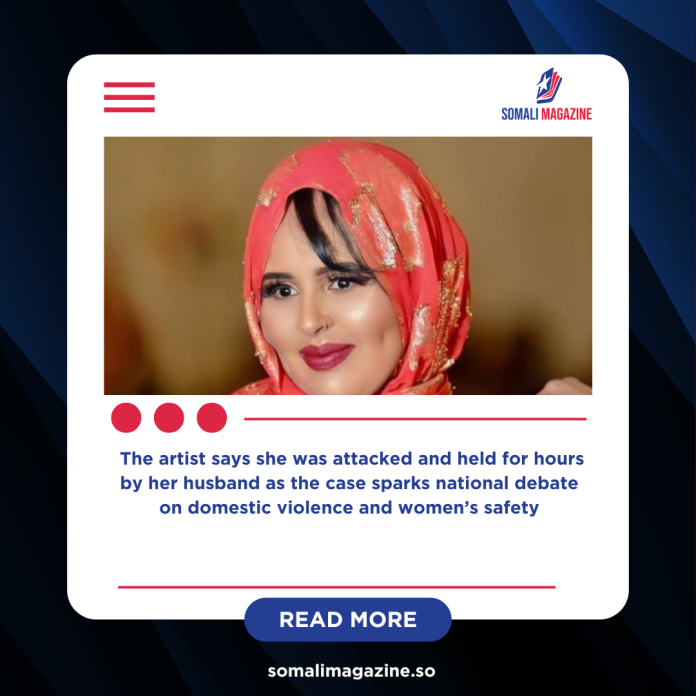
Prominent Somali singer Farhiya Ahmed Adaawe Geedi, popularly known as Farhiya Fiska, has publicly accused her husband of violently assaulting her in Somaliland’s capital, Hargeisa, describing the incident as a terrifying experience that nearly cost her life.
Speaking in an interview on Tuesday, Farhiya said the alleged attack happened inside their home, where she claims her husband, Mubarak Ahmed Yusuf, also known by his stage name “October,” physically attacked her and confined her to a locked room for several hours. She said the ordeal left her severely injured and emotionally shaken, adding that she never expected such an incident to happen to her.
Farhiya explained that she was held against her will for approximately four hours, during which she says she was subjected to sustained physical abuse. According to her account, the attack left her in intense pain and distress. She described the experience as one of the most traumatic moments of her life and said she feared she would not survive.
She stated that her husband was arrested following the incident, but was later released on bail. Farhiya confirmed that she has chosen to pursue the matter legally and that the case is currently moving through the justice system. She said she is determined to see the process through, not only for herself but also to encourage other women facing similar situations to speak out.
Farhiya also shared that while she suffered serious injuries, her condition has since improved and her health is now stable. She said she is receiving care and support as she continues to recover from both the physical and emotional impact of the alleged assault.
The incident has sparked a strong reaction across Somali social media platforms, with many users expressing outrage and solidarity with the singer. Activists, public figures, and ordinary citizens have called for accountability and justice, using the case to highlight the broader issue of domestic violence and the need for stronger protection for women. Many have praised Farhiya for speaking openly about her experience, describing her decision as courageous in a society where such matters are often kept private.
Farhiya and Mubarak were living together in Hargeisa at the time of the incident. As of now, Mubarak has not issued a public statement addressing the allegations made against him.
In previous interviews, Mubarak, who is also a musician, has spoken openly about his personal life, stating that he had been married multiple times before marrying Farhiya. However, these past statements have resurfaced mainly as background context and have not been directly linked to the current legal case.
The allegations have once again brought attention to the issue of domestic violence within Somali communities, a topic that remains sensitive and frequently underreported. Human rights advocates have long argued that many survivors stay silent due to fear, social stigma, or lack of trust in legal systems. They continue to call for stronger laws, better enforcement, and accessible support services for victims.
Farhiya’s case has become a focal point in the ongoing conversation about women’s safety, accountability, and justice. As legal proceedings continue, many are watching closely, hoping the outcome will not only bring clarity to the case but also contribute to broader efforts to protect survivors of domestic abuse and encourage open dialogue on an issue that affects countless families.