Facebook

Twitter (X)

Instagram

Somali Magazine - People's Magazine
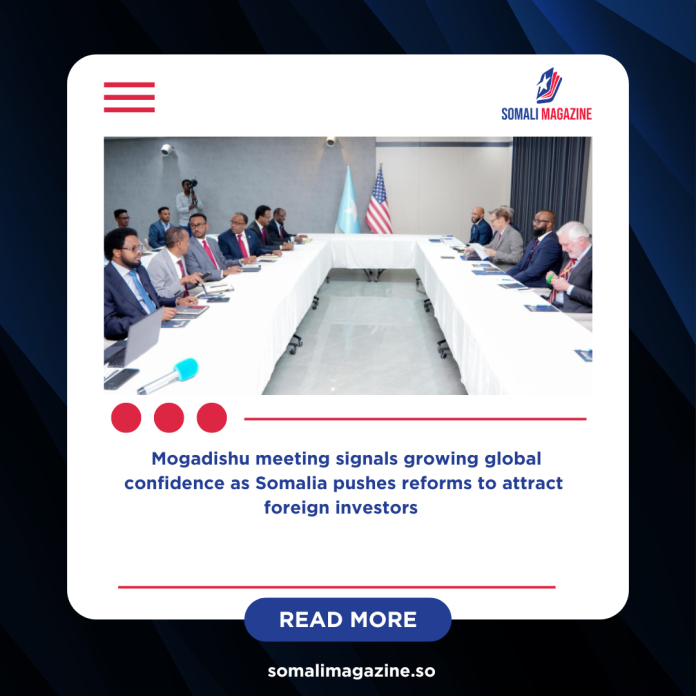
Somalia and the United States have held high-level talks in Mogadishu aimed at strengthening trade and investment ties, with a strong focus on energy and critical minerals. The meeting, held on Tuesday, marked the first time such discussions were formally convened inside Somalia, a move both sides described as a sign of growing confidence in the country’s improving security and economic direction.
The U.S. delegation was led by Justin Dives, the chargé d’affaires at the U.S. Embassy in Somalia. On the Somali side, senior officials from the ministries of commerce and industry, petroleum and minerals, and foreign affairs took part in the discussions. The gathering reflected a shared interest in deepening cooperation and turning Somalia’s natural resources into drivers of economic growth.
During the talks, Somali officials presented a range of investment opportunities in oil, gas and mineral resources. They highlighted recent reforms aimed at improving transparency, clarifying business regulations and protecting the rights of investors. According to the officials, these changes are designed to create a stable and predictable business environment that can attract serious foreign direct investment.
Energy development was at the center of the discussions. Both sides explored ways to advance Somalia’s hydrocarbons sector and tap into critical minerals that are increasingly important in global markets. There was agreement on the importance of clear legal frameworks, accountable governance and long-term partnerships to ensure that cooperation benefits both countries in a sustainable way.
As part of the outcome, the two governments agreed to establish joint technical committees. These teams will follow up on the discussions and work on implementing agreed priorities. The goal is to move from dialogue to action by addressing technical, regulatory and investment-related matters in a structured way.
Somalia’s Minister of Petroleum and Minerals, Daahir Shire Mohamed, said the meeting focused on encouraging U.S. investors to explore opportunities in Somalia’s oil and mining sectors. He noted that both sides discussed how they could jointly benefit from the country’s resources while creating a business environment that welcomes American investment.
He added that further technical meetings would be held between his ministry, the Ministry of Commerce and a technical team from the U.S. Embassy. These follow-up sessions are expected to refine cooperation plans and address practical steps needed to advance projects. Somalia also briefed the U.S. delegation on the policy frameworks guiding resource management and preparations for upcoming phases of mineral and oil development.
Justin Dives reaffirmed Washington’s readiness to support Somalia’s economic development. He emphasized building partnerships based on transparency, mutual respect and shared interests. His remarks signaled continued U.S. engagement not only in Somalia’s security but also in its long-term economic progress.
The talks come at a time when international interest in Somalia’s offshore energy potential is growing. Recently, Turkey sent its deep-sea drilling vessel to Somali waters for what it described as its first offshore exploration mission beyond its own maritime zone. The vessel, known as Cagri Bey, is expected to begin drilling at the Curad-1 well off Somalia’s coast in April.
Turkey’s Energy Minister, Alparslan Bayraktar, described the deployment as a historic moment for his country’s energy ambitions. The ship, escorted by Turkish naval vessels, is expected to arrive within weeks. Ankara has made clear that it aims to expand hydrocarbon production through overseas exploration and production-sharing agreements, with Somalia emerging as a key partner.
For Somalia, the growing interest from both the United States and Turkey signals renewed global attention to its natural resources. Officials say the country is working to ensure that this interest translates into responsible investment, job creation and long-term economic growth.
The Mogadishu meeting represents a step toward positioning Somalia as a more active player in global energy and mineral markets. While challenges remain, the establishment of technical committees and the commitment to ongoing dialogue suggest that both governments are serious about turning discussions into tangible economic cooperation.