
Facebook

Twitter (X)

Instagram

Somali Magazine - People's Magazine
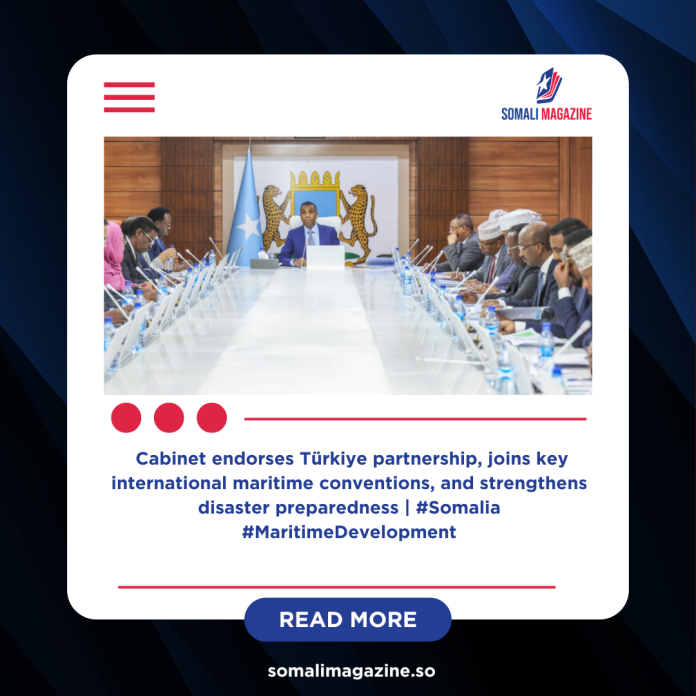
Somalia’s federal Cabinet has approved a set of major maritime agreements aimed at transforming the country’s shipping, port services, and international maritime standing, marking what officials describe as an important step toward economic growth and global integration. The decisions were made during a regular Cabinet meeting held in Mogadishu and chaired by Prime Minister Hamza Abdi Barre, as the government continues efforts to rebuild key sectors and strengthen state institutions.
At the center of the approvals is a broad maritime cooperation agreement between Somalia and Türkiye. The deal is designed to support the development of maritime trade while improving how Somalia manages its ports and coastal shipping activities. Under the agreement, the two countries will work together to modernize ship traffic management systems, upgrade port services, and promote fair and equal treatment in port operations. It also allows for the mutual recognition of seafarers’ certificates, making it easier for Somali maritime professionals to work internationally and for foreign operators to engage with Somali ports under recognized standards.
The cooperation framework further emphasizes technical support and knowledge-sharing, with the aim of building long-term local capacity. Officials believe this will help Somalia improve efficiency, attract investment, and create safer conditions for both commercial shipping and maritime workers. By facilitating smoother commercial maritime activities, the agreement is expected to boost trade and support broader economic recovery efforts.
In addition to the partnership with Türkiye, the Cabinet approved Somalia’s accession to several key international maritime conventions. These include the International Convention on Tonnage Measurement of Ships of 1969, which standardizes how ships are measured worldwide; the Nairobi International Convention on the Removal of Wrecks of 2007, which addresses the safe and timely removal of hazardous shipwrecks; and the Maritime Labour Convention of 2006, which sets minimum working and living standards for seafarers. Government officials said joining these conventions will align Somalia with global maritime rules, improve safety at sea, protect the marine environment, and strengthen labor protections for Somali seafarers.
The Minister of Ports and Maritime Transport, Abdulkadir Mohamed Nur, welcomed the Cabinet’s decisions, describing them as a turning point for Somalia’s maritime governance. He said the agreements would help modernize ports, promote safer and more efficient maritime trade, and ensure that Somali seafarers’ rights and welfare are protected. According to the minister, integrating Somalia into the global maritime system is essential for building a resilient and competitive maritime sector that can contribute meaningfully to national development.
Beyond maritime issues, the Cabinet also approved legislation establishing a national disaster and risk management fund. The move comes as Somalia continues to face severe climate-related challenges, including prolonged drought that has affected water access, food security, and livelihoods. The fund is intended to bring disaster preparedness, prevention, and emergency response under a single, coordinated framework. Officials said this approach will improve cooperation between government agencies and communities, enabling faster and more effective responses to both natural and man-made crises.
The Cabinet further endorsed several additional policies and agreements aimed at strengthening government institutions and improving public service delivery. These measures are part of ongoing efforts to enhance coordination across state bodies and ensure that public institutions are better equipped to serve citizens.
During the same meeting, the National Committee on Combating Smuggling and Human Trafficking presented a report highlighting the growing threat of illegal migration networks. The committee warned that trafficking exposes victims, especially young people, to serious physical harm and human rights abuses. It also noted that human trafficking undermines Somalia’s future by draining the country of its youth and weakening its long-term development prospects. Officials stressed the need for stronger action to dismantle trafficking networks and protect vulnerable populations.
Somalia and Türkiye have steadily expanded their partnership since 2011, working together in areas such as infrastructure development, education, health care, security, and economic recovery. With the newly approved agreements, maritime cooperation is now emerging as a key pillar of that relationship, reflecting Somalia’s renewed focus on leveraging its long coastline and strategic location to support growth and regional trade.