
Facebook

Twitter (X)

Instagram

Somali Magazine - People's Magazine
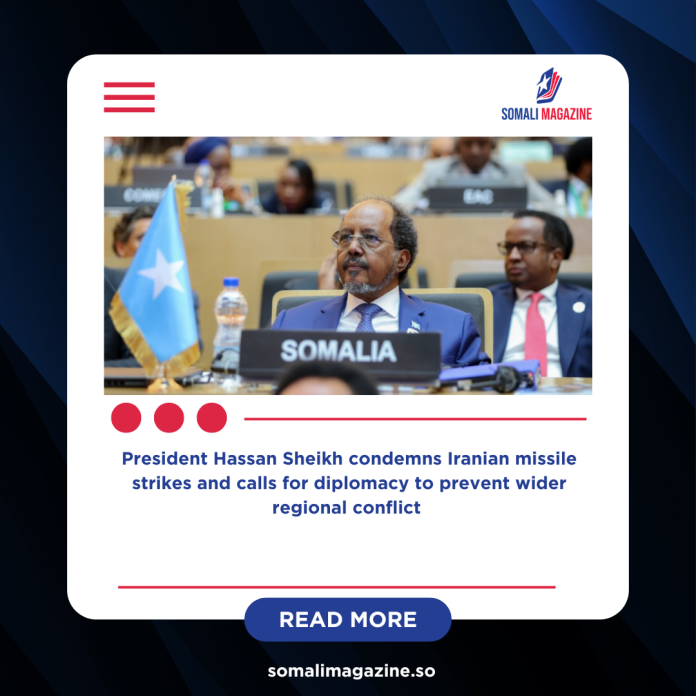
Somali President Hassan Sheikh Mohamud has held separate phone calls with King Abdullah II of Jordan and the Amir of Qatar, Sheikh Tamim bin Hamad Al Thani, to discuss the growing tensions and military confrontations in the Middle East, according to a statement from Villa Somalia.
During the conversations, the leaders focused on the worsening security situation in the region. They expressed concern about the rising violence and stressed the importance of reducing tensions through dialogue and diplomatic engagement. The talks highlighted the urgent need for calm and cooperation to prevent the crisis from expanding further.
President Hassan Sheikh reaffirmed Somalia’s support for both Jordan and Qatar, which have recently faced Iranian missile strikes. He described the attacks as clear violations of international law and said they threaten not only the targeted countries but also peace and stability across the wider region. The president emphasized that respect for national sovereignty is essential to maintaining order and preventing further conflict.
He also welcomed what he described as a unified Arab response to the crisis. According to the presidency’s statement, the Somali leader believes that standing together is crucial at a time when regional stability is under serious threat. He noted that attacks on the sovereignty of Arab nations undermine efforts to calm the situation and create space for dialogue.
In recent days, Somalia’s federal government has formally condemned Iranian strikes targeting several Arab countries, including Saudi Arabia, Qatar, Kuwait, Jordan, Bahrain and Oman. The Ministry of Foreign Affairs stated that Somalia supports the right of those countries to take lawful measures to defend their territories and protect their citizens. The government reiterated its position that disputes should be resolved through peaceful means rather than military action.
Notably, the government’s statement did not mention the United Arab Emirates. The omission comes at a time when relations between Somalia and the UAE have faced political strain in recent years. Although the statement did not explain the absence, observers see it as a reflection of the complicated diplomatic ties between the two countries.
The current escalation in the Middle East follows a series of strikes by the United States and Israel on Iranian targets. These attacks were followed by retaliatory actions from Tehran, increasing fears of a wider confrontation. As the exchanges continue, governments across Africa and the Arab world are closely watching the situation, worried that it could spiral into a broader regional war with serious global consequences.
For Somalia, the crisis carries particular importance. The country maintains close diplomatic and economic relationships with several Gulf states. Remittances, trade partnerships and development support from the region play a significant role in Somalia’s economy. As a result, instability in the Middle East could have direct and indirect impacts on Somalia’s own security and economic wellbeing.
By speaking directly with the leaders of Jordan and Qatar, President Hassan Sheikh signaled Somalia’s commitment to standing alongside its Arab partners during a period of uncertainty. At the same time, the Somali government has continued to call for restraint from all sides, urging diplomacy as the only sustainable path forward.
As tensions remain high, Somalia’s position reflects a broader concern shared by many countries in the region: that continued military exchanges risk deepening divisions and prolonging instability. Through its statements and diplomatic outreach, Mogadishu is seeking to balance solidarity with its allies while encouraging efforts aimed at de-escalation and long-term peace.