Facebook

Twitter (X)

Instagram

Somali Magazine - People's Magazine
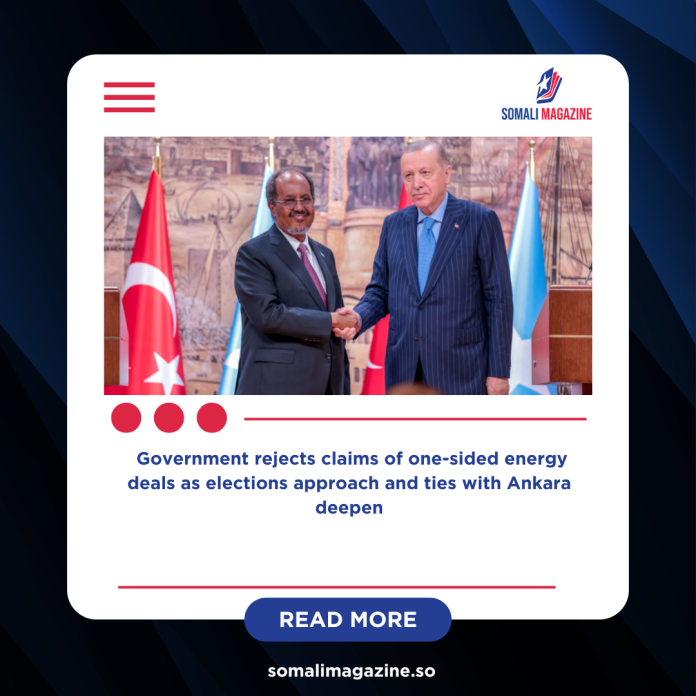
Growing cooperation between Somalia and Türkiye has sparked debate inside the country, with some critics claiming the partnership mainly benefits Ankara. In response, Somali authorities have firmly denied the accusations, saying the country’s sovereignty and natural resources remain fully protected.
The government issued its clarification on Friday after social media posts alleged that Türkiye was gaining unfair access to Somalia’s oil and energy resources. Officials described the claims as false and part of a misinformation campaign aimed at damaging relations between the two countries. They stressed that all agreements signed with Türkiye are based on clear legal frameworks that protect Somalia’s national interests.
According to official sources, the agreement between Turkish Petroleum Corporation (TPAO) and the Somali Petroleum Authority clearly states that Somalia’s natural resources belong to the Somali people. Exploration and production activities, they said, are carried out under Somali law and in a way that safeguards the country’s sovereignty. Both Somali and Turkish officials emphasized that their partnership is built on transparency, mutual respect, and shared benefit.
The issue comes at a sensitive political moment. Somalia is preparing for important elections later this year, and tensions between the government and opposition groups have been rising. In such an atmosphere, major agreements—especially those involving oil, gas, and minerals—often face intense scrutiny. These sectors are considered vital to the country’s future wealth and independence.
Political analyst Abdulweli Beri said concerns about “one-sided benefits” are not new, but have grown stronger recently because of the political climate and economic challenges. He explained that in developing countries like Somalia, agreements involving natural resources are always sensitive. Even the perception that a foreign partner could receive long-term advantages can trigger public concern and political criticism.
Beri added that the current political polarization has made the situation more intense. As elections approach, opposition leaders are closely examining government deals and questioning their transparency. When full details of agreements are not widely shared or clearly explained, he said, speculation can quickly spread. In this case, the government’s public denial appears aimed at preventing the controversy from escalating and damaging relations with a key ally.
Türkiye is considered a strategic partner for Somalia. Over the years, cooperation between Mogadishu and Ankara has expanded beyond energy into infrastructure, security, social services, and investment. The Somali National News Agency recently highlighted that the relationship is framed as a partnership between two independent states with a long-standing friendship.
Earlier this month, a Turkish vessel named “Cagri Bey” departed for Somalia to begin offshore oil exploration. The move is part of broader economic and defense cooperation agreements signed by the two governments. While supporters see the exploration as a step toward unlocking Somalia’s economic potential, critics argue that such projects must be handled with full transparency to avoid misunderstandings.
Cooperation between the two countries also continues in other areas. Somalia’s Interior Security Minister recently received military equipment for the national police from the Turkish ambassador. In addition, Somalia’s Communications Authority signed a memorandum of understanding with Türkiye’s Information and Communication Technologies Authority to strengthen collaboration in electronic communications. The two nations also celebrated 60 years of diplomatic relations in a ceremony held in Ankara.
Despite the criticism, analysts believe Somalia will continue to value its partnership with Türkiye. Beri noted that Ankara has strategic interests in the Horn of Africa and is likely to maintain its presence in Somalia. At the same time, he suggested that Somali authorities may need to provide more detailed public explanations about key agreements to reassure citizens and reduce political tension.
As the country heads toward elections, debates over foreign partnerships are likely to continue. For now, the government insists that cooperation with Türkiye serves Somalia’s long-term development goals while fully respecting the nation’s sovereignty and the rights of its people.