Facebook

Twitter (X)

Instagram

Somali Magazine - People's Magazine
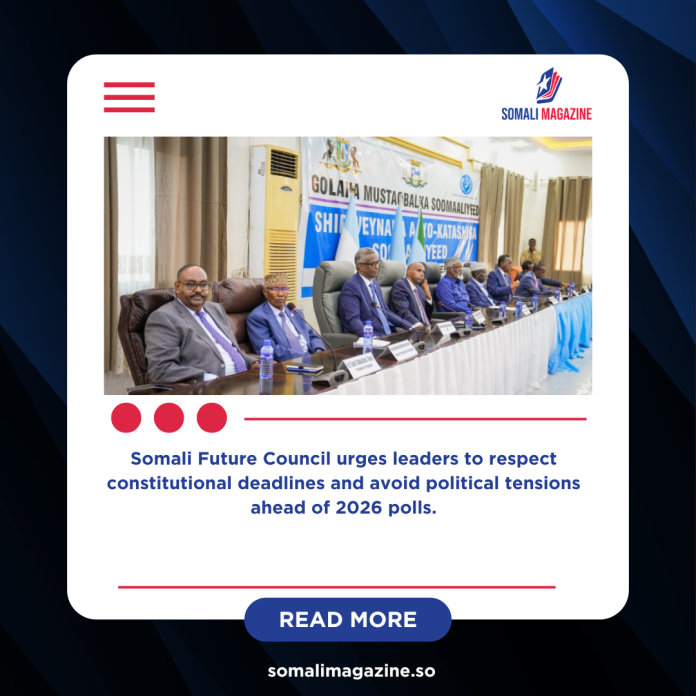
Somalia’s opposition-aligned Somali Future Council has warned that any delay in the country’s upcoming national elections could create political uncertainty and threaten constitutional order. In a statement released on Monday, the council urged government leaders and political stakeholders to ensure that elections take place within the timelines set by the constitution.
According to the council, the term of Somalia’s Federal Parliament under the 2012 provisional constitution will end on April 14, 2026, while the president’s term is scheduled to expire on May 15, 2026. The group stressed that these deadlines must be respected to maintain political stability and uphold democratic governance.
The council said Somalia cannot afford to repeat past political mistakes that led to unrest. It pointed to the events of 2021, when disagreements over extending the government’s term sparked a serious political crisis. At the time, tensions escalated in Mogadishu after a proposal to extend the president’s mandate by two years was introduced. The move triggered clashes between security forces loyal to different political factions, raising fears of wider instability in the country.
Because of that experience, the Somali Future Council said leaders should avoid any actions that might lead to delays in the electoral process or create disputes among political actors. The group called on federal authorities, politicians, and other stakeholders to respect the constitution and protect the country’s system of governance.
The council also emphasized the importance of federal member states holding their own elections in line with constitutional principles. It said that following the federal framework would strengthen cooperation between the national government and regional administrations. According to the group, proper coordination between the different levels of government is essential for building trust and ensuring smooth political transitions.
The statement comes shortly after President Hassan Sheikh Mohamud approved a revised federal constitution, following its passage in parliament. The updated constitution introduces several changes to the country’s governance structure, including a new term limit for federal institutions.
Under the revised charter, the terms for federal institutions will now last five years. This replaces the previous four-year term limit that was established in the 2012 provisional constitution. Government officials say the changes are part of a broader effort to complete Somalia’s long-delayed constitutional review process.
Authorities argue that the updated constitution will help clarify the roles and responsibilities of government institutions, which they believe will improve governance and political stability. Officials have described the reform as a necessary step toward strengthening the country’s democratic system.
However, some opposition figures and political groups have raised concerns about how the changes were adopted. Members of the Somali Future Council say the amendments were approved without broad national consensus. They argue that such major constitutional changes should involve wider consultation with political leaders, regional administrations, and civil society groups.
Critics also worry that the amendments could affect the political timeline and influence the upcoming electoral process. They say that without agreement among key stakeholders, the changes could deepen political divisions instead of resolving them.
In its statement, the Somali Future Council described the current moment as a crucial period for Somalia’s political future. The group said the country is at a sensitive stage that requires responsible leadership and cooperation among political actors.
The council urged leaders to prioritize dialogue, political tolerance, and respect for the rule of law. It said these principles are essential to maintaining stability and preventing new political conflicts.
Somalia has spent years working to rebuild its political institutions after decades of conflict and instability. While progress has been made, political disagreements over elections and constitutional reforms have often created tensions between the government and opposition groups.
The Somali Future Council warned that respecting constitutional deadlines and holding elections on time will be critical in maintaining public trust in the political system. It said that ensuring a transparent and orderly electoral process will help protect the country from renewed instability and support its ongoing efforts toward democratic governance.