
Facebook

Twitter (X)

Instagram

Somali Magazine - People's Magazine
Somalia’s Upper House of Parliament on Monday approved the National Payment System Bill, a major piece of financial legislation designed to strengthen regulation and oversight in the country’s fast-growing payments sector. The bill passed with overwhelming support, reflecting broad political agreement on the need to modernize and secure Somalia’s financial system as digital and mobile payments continue to dominate daily economic activity.
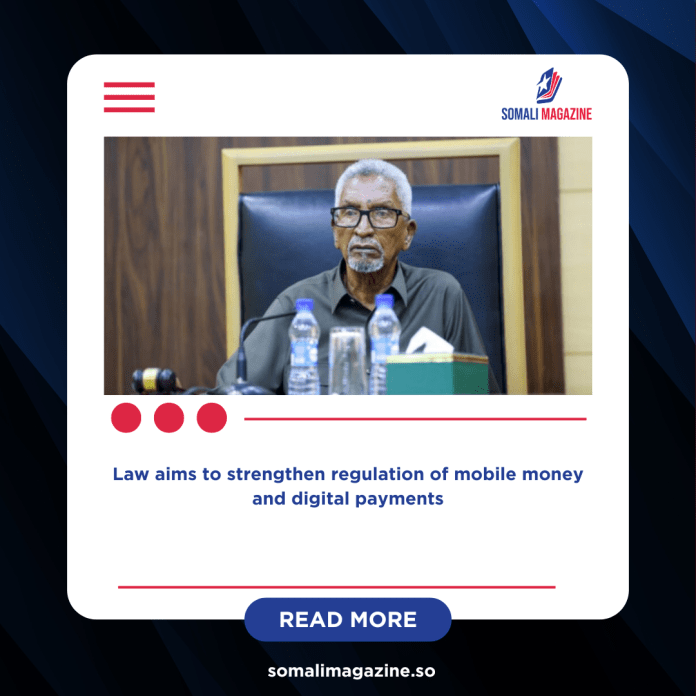
The vote took place during the 14th session of the Upper House’s seventh sitting, where 28 senators voted in favor of the bill. There were no votes against it and no abstentions, according to parliamentary officials. The session was chaired by Upper House Speaker Abdi Hashi Abdullahi, alongside Second Deputy Speaker Abdullahi Hirsi, popularly known as Timacadde. Lawmakers focused on the bill’s third and final reading, marking the last stage of debate in the Upper House before approval.
During the session, the Deputy Chairperson of the Upper House Finance Committee, Senator Ibraahim Awgab Osman, presented a detailed report on the bill. He explained that the committee had reviewed earlier feedback from senators and made several revisions to address concerns raised during previous discussions. These changes were aimed at improving clarity, strengthening oversight mechanisms, and ensuring the law responds to the realities of Somalia’s unique financial environment. After deliberations, the revised bill was presented for a vote and passed by a decisive margin.
The Ministry of Finance welcomed the Upper House’s decision, describing the approval as a critical milestone for Somalia’s financial future. Officials said the law will establish a clear and comprehensive legal framework to regulate payment service providers, including mobile money operators and other digital financial platforms. In a country where mobile payments are widely used for everyday transactions such as buying food, paying bills, and sending money, the ministry said stronger rules are essential to protect consumers and build trust in the system.
According to government officials, the National Payment System Bill is expected to improve transparency, reduce financial risks, and strengthen accountability across the payments sector. The law will also help prevent misuse of financial services while encouraging innovation and growth within a regulated environment. By setting clear standards for licensing, supervision, and compliance, authorities believe the bill will support a more stable and reliable financial system.
The Upper House vote follows earlier approval by the House of the People, Somalia’s lower chamber of parliament. In November 2025, lawmakers in the House of the People passed the bill during their 12th sitting of the seventh session. That session was chaired by Speaker Sheikh Adan Mohamed Nur, also known as Madobe. Parliamentary records show that 154 members of the lower house voted in favor of the legislation, demonstrating strong support across both chambers.
The National Payment System Bill was drafted by the Ministry of Finance as part of wider efforts to modernize Somalia’s financial sector and align it with international best practices. These reforms are seen as crucial for supporting economic growth, improving confidence among investors, and strengthening cooperation with international financial institutions. Somalia has made steady progress in rebuilding its financial infrastructure in recent years, and officials say this law is another important step in that process.
With approval now secured from both the Upper House and the House of the People, the bill is expected to be forwarded to the president for signing into law. Once enacted, it will formally establish government oversight of electronic payments and financial services, providing legal certainty for businesses and protection for users. Lawmakers and government officials say the move signals Somalia’s commitment to building a modern, transparent, and resilient financial system that can support the country’s evolving economy.