
Facebook

Twitter (X)

Instagram

Somali Magazine - People's Magazine
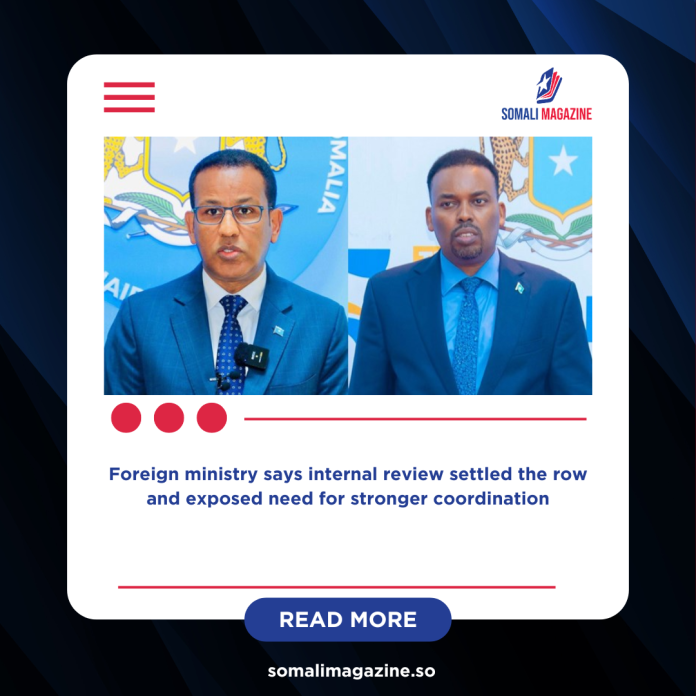
Somalia’s federal government says it has successfully resolved a rare and public disagreement between its embassies in Kenya and Tanzania, bringing to an end a situation that had raised concerns about coordination and unity within the country’s diplomatic service. Officials say the issue has been handled internally and lessons have been drawn to prevent similar incidents in the future.
The dispute surfaced in September last year when Somalia’s embassy in Tanzania released a statement criticizing a visit by the Somali ambassador to Kenya to Kinshasa, the capital of the Democratic Republic of Congo. The Tanzanian mission said the visit had been conducted without its knowledge and described it as a violation of diplomatic norms. It also argued that the trip interfered with its responsibilities, since Somalia’s ambassador to Tanzania is also accredited as the non-resident ambassador to the Democratic Republic of Congo and to the East African Community.
The unusual public exchange between two Somali diplomatic missions quickly attracted attention, as such disagreements are typically handled quietly through internal government channels. Observers viewed the episode as a sign of deeper coordination challenges within Somalia’s foreign service, which is still in the process of rebuilding after years of conflict and institutional breakdown.
In response, Somalia’s embassy in Kenya dismissed the criticism and defended the ambassador’s visit to Kinshasa. The Kenyan mission said the trip was focused on strengthening trade ties and promoting business opportunities for Somali traders and entrepreneurs operating across the region. According to the embassy, the visit was part of broader efforts to expand Somalia’s economic and diplomatic engagement in Africa.
State Minister for Foreign Affairs Ali Omar Balcad later confirmed that the matter had been fully resolved following an internal review conducted by the Ministry of Foreign Affairs. Speaking in an interview with the Mizan Podcast, Balcad said the ministry took the issue seriously and moved quickly to address it in a structured and professional manner.
He explained that the ministry formed an advisory committee made up of former Somali ambassadors to investigate what went wrong. Both the ambassador to Kenya and the ambassador to Tanzania were summoned to appear before the panel and give their accounts. After reviewing the matter, the committee issued recommendations aimed at improving coordination and ensuring clearer communication among Somalia’s diplomatic missions abroad.
“The matter has been resolved,” Balcad said, stressing that there were no lingering disputes between the two envoys. He described the incident as unfortunate but said it had also provided an important learning opportunity for Somalia’s foreign service. According to the minister, the government is determined to ensure that similar misunderstandings do not happen again.
Balcad acknowledged that the episode exposed weaknesses in training, internal guidance, and coordination within the diplomatic corps. He said the ministry is now working to strengthen procedures, clarify roles, and improve communication between embassies, particularly in regions where ambassadors hold multiple accreditations.
Somalia has been steadily working to rebuild and professionalize its diplomatic institutions as it deepens engagement with neighboring countries, regional blocs, and international partners. After decades of civil war and state collapse, the country is still restoring systems that many other nations take for granted, including clear chains of command and standardized diplomatic practices.
Government officials say incidents like the embassy dispute, while embarrassing, highlight why reforms are necessary and urgent. By addressing the issue internally and drawing on the experience of former diplomats, the foreign ministry hopes to reinforce discipline and cooperation across its missions abroad.
As Somalia seeks a stronger voice in regional and global affairs, authorities believe that a more coordinated and professional diplomatic service will be critical. The government says it remains committed to learning from past mistakes and building institutions capable of representing the country’s interests with unity, clarity, and confidence.