
Facebook

Twitter (X)

Instagram

Somali Magazine - People's Magazine
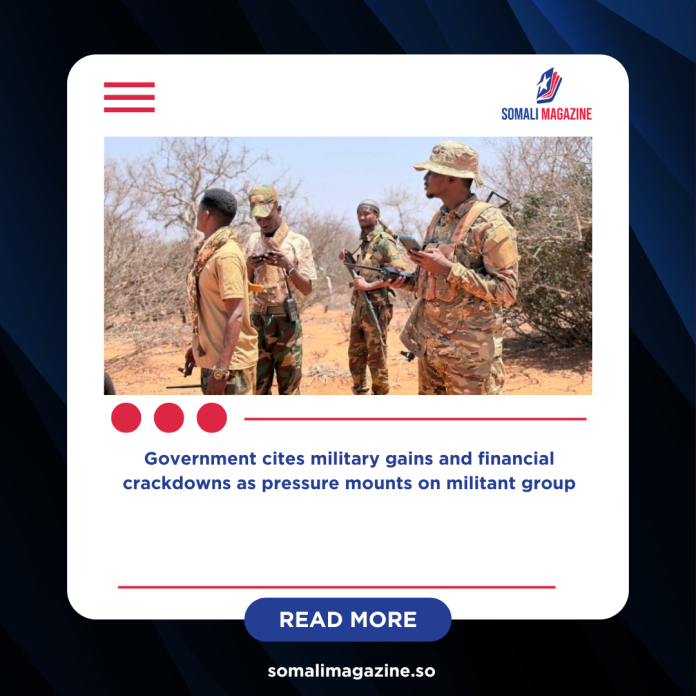
Somali security forces say they have killed 17 senior al-Shabab commanders over the past six months, in what the government describes as a major step forward in its fight against the militant group. Officials say the operations are part of a broader strategy to weaken the group both on the battlefield and financially.
Information Minister Daud Aweis announced the update in a statement shared on social media, saying the government’s counterterrorism campaign has focused on dismantling al-Shabab’s leadership structure. According to him, targeting top commanders is intended to disrupt planning, coordination and recruitment within the group.
At the same time, the government repeated its offer of amnesty to fighters who choose to surrender. Officials said members who renounce violence and agree to join rehabilitation programs will be given a chance to reintegrate into society. The message, they added, is clear: those who continue fighting will be pursued, but those willing to change course will be supported.
The latest announcement follows another government statement claiming that al-Shabab is also facing serious financial pressure. Authorities say recent operations killed two senior figures responsible for overseeing the group’s internal administration and finances. They identified them as Mohamed Mire Jama, described as the group’s “interior minister,” and Abdullahi Wadaad, who was said to be in charge of financial operations.
According to the state news agency Somali National News Agency, the deaths of these officials have disrupted al-Shabab’s ability to coordinate its revenue collection and manage its economic networks. The government believes this has created internal challenges for the group, especially at a time when it is already under sustained military pressure.
Officials also say they have intensified financial surveillance and anti-money laundering efforts to cut off the group’s sources of income. These measures include tracking suspicious transactions and enforcing laws aimed at preventing funds from reaching militant networks. Authorities argue that reducing al-Shabab’s income is just as important as winning battles on the ground, since money is essential for weapons, recruitment and logistics.
Al-Shabab, which is linked to al-Qaida, has been fighting Somalia’s federal government for more than 16 years. During that time, it has carried out numerous attacks targeting security forces, government officials and civilians. The group has controlled parts of rural central and southern Somalia, using those areas as bases for operations and taxation.
In recent months, the Somali National Army has expanded its campaign against the group. Since July, government forces have stepped up operations aimed at weakening al-Shabab’s territorial control and operational capacity. They have been supported by the African Union Support and Stabilization Mission in Somalia, as well as other international partners.
The government says the combined military and financial pressure is beginning to show results. By removing key leaders and restricting funding, officials hope to create divisions within the group and limit its ability to plan large-scale attacks. However, they acknowledge that the fight is not over and that al-Shabab still has the capacity to carry out deadly assaults.
Somalia’s leadership has repeatedly pledged to continue operations until the group is fully dismantled. Officials maintain that sustained pressure, regional cooperation and community support are critical to achieving long-term stability. They also emphasize that rebuilding liberated areas, restoring services and offering alternatives to former fighters are necessary steps to prevent the group from regaining strength.
While challenges remain, the government portrays the recent developments as evidence that its strategy is gaining ground. By targeting both commanders and financial networks, authorities say they are working to weaken al-Shabab from within and reduce the threat it poses to the country’s security and future.